The Guardian World News |

- Obama defends US military intervention in Libya
- Cuts put frontline police in office jobs
- Plutonium traces in Fukushima soil
- Payouts show growing catalogue of civilian suffering
- NHS reforms 'will lead to confusion'
- I have no regrets, says Crowley
- NoW locates 'lost' archive of emails
- Syrian protesters come under fire
- Gove announces EMA replacement
- BA cabin crew vote for more strikes
- Madonna sued over Malawi school
- Police hope to identify second body
- MPs to probe corporate tax avoidance
- China's science publishing boom
- Return of the bubble perm
- The daring art of the aesthetics
- Reminder of Royal Fusiliers' grit
- Would you eat out at a supermarket?
- Peppa Pig World: hog heaven?
- Who decides the 'elite' universities?
- Wanted: vampire-free fantasy
- Poem of the week: The Two Deserts
- Clegg leads Latin charm offensive
| Obama defends US military intervention in Libya Posted: 28 Mar 2011 05:59 PM PDT US president gives speech to nation claiming US action has saved 'countless lives' – but rules out targeting Gaddafi Barack Obama has addressed the American people on TV and said that military intervention by America had prevented a massacre in Libya. The US president also called on those people still loyal to Muammar Gaddafi to desert him, and said that the end of the Libyan leader's rule was inevitable. "We will deny the regime arms, cut off its supply of cash, assist the opposition, and work with other nations to hasten the day when Gaddafi leaves power," Obama said. "It may not happen overnight, as a badly weakened Gaddafi tries desperately to hang on to power. But it should be clear to those around Gadaffi, and to every Libyan, that history is not on his side." Obama had previously said that he wanted Gaddafi to leave power, even though such a goal appears to exceed the mandate of the UN resolution authoring a no-fly zone and the protection of civilians. But Obama did say that the coalition would not target Gaddafi, and that regime change by armed force – especially by American ground troops – was not an aim. "To be blunt, we went down that road in Iraq. Thanks to the extraordinary sacrifices of our troops and the determination of our diplomats, we are hopeful about Iraq's future. "But regime change there took eight years, thousands of American and Iraqi lives, and nearly a trillion dollars. That is not something we can afford to repeat in Libya," he said. Instead Obama sought to justify the military attacks on Gaddafi's army by saying there was no doubt that a massacre of opposition forces and civilians had been prevented. Obama pulled no punches in detailing what he believed would have happened had the rebel stronghold of Benghazi fallen into loyalist hands. "Gaddafi declared that he would show "no mercy" to his own people. He compared them to rats, and threatened to go door to door to inflict punishment. In the past, we had seen him hang civilians in the streets, and kill over a thousand people in a single day. We knew that if we waited one more day Benghazi … could suffer a massacre that would have reverberated across the region and stained the conscience of the world," Obama declared. The powerful language of Obama's speech was used in part to explain to the American public why the US is now involved in a third conflict in a Muslim country. The setting of the address – the National Defence University in Washington – was also a clear part of Obama's communication strategy. Normally when American presidents speak to the nation they use the Oval Office. Obama has come in for a barrage of criticism from Republicans and some Democrats for a perceived slowness to speak clearly and publicly about why American forces are involved in Libya. Critics have accused him of not setting out concrete objectives and failing to justify another military intervention in the Muslim world. Obama's own administration has appeared somewhat divided on the issue. While Hillary Clinton, the secretary of state, has pushed for military action, others – like Pentagon chief Robert Gates – have seemed more reluctant. On Sunday, Gates gave a television interview in which he said he did not think Libya was a "vital interest" to America. But during Obama's speech Gates was seated in the front row, perhaps as an attempt to show a unity of purpose. Obama's speech sought to address the complexity of the changes sweeping through the Arab world. Some critics have wondered why military force has been used in Libya but not in other states, such as Syria, Yemen and Bahrain, where government crackdowns have cost scores of lives. Obama said the US could not use its military in every situation, and would always seek to build and lead coalitions rather than act unilaterally. But, verbally at least, he signalled that his administration will embrace change across the region and those who espouse democratic ideals. "The United States will not be able to dictate the pace and scope of this change. Only the people of the region can do that. But we can make a difference. I believe that this movement of change cannot be turned back, and that we must stand alongside those who believe in the same core principles that have guided us through many storms," he said. guardian.co.uk © Guardian News & Media Limited 2011 | Use of this content is subject to our Terms & Conditions | More Feeds
|
| Cuts put frontline police in office jobs Posted: 28 Mar 2011 01:13 PM PDT Leaked memo reveals Warwickshire police authority will take up to 150 officers off the streets Serving police officers are being taken out of frontline roles and moved to cover the "back-office" functions of civilian staff who have been made redundant, according to leaked memos which show the perverse side-effects of budget cuts. The decision by Warwickshire police authority – one of the smaller forces in England and Wales with 1,800 officers and staff – to draft up to 150 frontline officers into civilian desk jobs is expected to be followed by other forces grappling with a 20% cut in their Whitehall funding. Police officers are Crown-appointed warrant holders and cannot be made redundant. They can only be "compulsorily retired" through an obscure regulation after more than 30 years' service, but civilian support staff do not enjoy such job security. The leak comes as a second survey of police authority intentions carried out by Labour confirms that the police are heading for 27,500 job losses, including 12,500 police officers, over the next four years. Ministers have vowed to protect frontline policing from the impact of the cuts and a report by Her Majesty's Inspector of Constabulary to be published on Wednesday is expected to clear up the confusion over where the "frontline" can be drawn in the battle against crime. The shadow home secretary, Yvette Cooper, said the Warwickshire situation showed that chief constables had been put in an impossible position: "It is now clear that when there is not the staff to help plan, co-ordinate or forensically investigate the fight against crime, then police officers will have to be taken off the streets to do this work. "The government needs to take responsibility and recognise that the loss of 12,500 police officers and 15,000 police staff across the country is taking risks with public safety and the progress on crime and antisocial behaviour that was made over the last decade." The decision by Warwickshire to redeploy frontline officers to roles such as staffing inquiry offices and control rooms and conducting routine visits to crime scenes was disclosed in a leaked memo by Richard Elkin, the force's human resources director. He has written to all 860 back-office staff inviting those with more than two years' service to apply for voluntary redundancy: "Whilst the force manages the required reductions in the number of police officers, it has been agreed that some will be temporarily posted into police staff posts which are currently vacant, or which will become vacant following voluntary redundancy," says the memo. The Warwickshire force faces losing 450 jobs out of its 1,800 strength to find savings of £23m in its £100m budget by 2015. The home secretary, Theresa May, and the police minister, Nick Herbert, have repeatedly said it is possible for savings to be found through cutting bureaucracy and back-office functions without hitting the frontline. Ian Francis, chairman of Warwickshire police authority, has said that there are too many police officers in the county force for the new model of policing which is being implemented. "We don't like it, they [Warwickshire police federation] don't like it, I don't think the public like it, but at the end of the day we have no option," Francis has said. Francis has predicted that other forces are also likely to draft frontline officers into support roles: "The simple matter is yes, we are going to lose policemen from the front line." Simon Reed, vice-chairman of the Police Federation, said Warwickshire's example would be followed by other forces: "What is happening in Warwickshire will happen elsewhere simply because of the sheer amount of money being cut from budgets. "When we lose staff in inquiry offices, control rooms or going to scenes of crime then this will happen." Reed said the cuts would reverse a 10- year process of getting uniformed officers back into mainstream police roles: "It is a question of teamwork. We all depend on each other. The frontline depends on the back-office function." But a Home Office spokeswoman insisted savings could be achieved without cutting the frontline. "We believe that police forces can make the necessary savings while protecting frontline services and prioritising the visibility and availability of policing," she said. "Forces must focus on driving out wasteful spending, and increasing efficiency in the back-office. The effectiveness of a police force does not depend primarily on the number of staff it has, but rather on the way they are deployed." guardian.co.uk © Guardian News & Media Limited 2011 | Use of this content is subject to our Terms & Conditions | More Feeds
|
| Plutonium traces in Fukushima soil Posted: 28 Mar 2011 05:55 PM PDT Government says levels are not harmful to human health as anxiety grows over leaks at stricken nuclear power plant Traces of plutonium have been found in the soil at the Fukushima Daiichi nuclear power plant, Japanese officials said on Monday, but not at levels considered harmful to human health. The discovery of plutonium - a byproduct of nuclear reactions - added to anxiety over the stricken plant, 150 miles north of Tokyo. Earlier, the government confirmed that levels of radioactivity in water leaking from a reactor at the facility resulted from a partial meltdown of fuel rods, amid growing fears that radiation may also have seeped into seawater and soil. The plant's operator, Tokyo Electric Power [Tepco], said readings of plutoinium-238, 239 and 240 were similar to those recorded in other parts of Japan after nuclear tests conducted overseas. "I apologise for making people worried," Tepco's vice president, Sakae Muto, told reporters. "It's not at a level that's harmful to human health." But an official from Japan's nuclear safety agency was more cautious. "While it's not at a level harmful to human health, I am not optimistic," Hidehiko Nishiyama said. "This means the containment mechanism is being breached, so I think the situation is worrisome." Tepco has yet to determine the source of the plutonium, although it appeared that in two places, the radioactive element had come from reactors rather than from the atmosphere. One of the plant's three reactors contains plutonium in its fuel mix. Meanwhile, contamination in a pool of water in the turbine building of the No 2 reactor was found to be 100,000 times normal levels, Tepco said. On Sunday the firm said the figure was 10m times higher, a mistake the government's chief spokesman, Yukio Edano, said was "absolutely unforgivable". Tepco was forced into another embarrassing apology after it admitted it had twice named the wrong isotope in its corrections about the levels of radiation. "On one hand, I do think the workers at the site are getting quite tired," Edano told reporters. "But these radiation tests are being used for making various decisions on safety … they are absolutely unforgivable." In addition, radiation above 1,000 millisieverts per hour was found in surface water in concrete tunnels outside the No 2 reactor, Tepco said. It added that the tunnels did not lead to the sea, but conceded it could not rule out that radioactive water had seeped into the ground. Greenpeace, meanwhile, said that it had recorded radiation levels of up to 10 microsieverts per hour in Iitate, a village 25 miles from the plant, and urged authorities to expand the evacuation zone from its current 12-mile radius. "It is clearly not safe for people to remain in Iitate, especially children and pregnant women, when it could mean receiving the maximum-allowed dose of radiation in only a few days," said Jan van de Putte, the group's radiation safety expert. "When further contamination from possible ingestion or inhalation of radioactive particles is factored in, the risks are even higher." Tepco has reportedly asked the French nuclear sector for assistance, seeking help from Electricite de France, Areva and the Nuclear Energy Agency, a research body, according to Eric Besson, France's industry and energy minister. Japan's nuclear and industrial safety agency (Nisa) said radioactive iodine-131 of 1,150 times the maximum allowable level had been detected in seawater near drainage outlets serving four of Fukushima's reactors. Nisa's spokesman Hidehiko Nishiyama said he suspected radioactive water from the plant was leaking into the sea. On Sunday he had denied any connection. Edano said partial meltdown had probably occurred when the plant was hit by the tsunami on 11 March, adding that there was no evidence of subsequent meltdown. Four of the facility's six reactors have yet to be made safe, while efforts are continuing to pump in fresh water to prevent a far more dangerous full meltdown. "The radiation seems to have come from fuel rods that were partially melted down and came into contact with the water used to cool the reactor," Edano said. "Steam may have condensed … carrying water from within the containment vessel." Airborne radiation has been confined to the reactor buildings, and work to remove contaminated water from the structures continued on Monday. Setbacks to attempts to cool the reactors, and the realisation the crisis is far from over, have added to the plight of tens of thousands of people living nearby. Sakae Muto, vice-president of Tepco, said: "Regrettably, we don't have a concrete schedule at the moment to enable us to say how many months, or years it will take [to make the plant safe]." About 70,000 people within a 12-mile radius of the Fukushima plant were evacuated soon after the disaster, while a further 130,000 people living in a 12-20-mile radius have been told to stay indoors. The government said that it had no plans to widen the evacuation zone. It is not known exactly how many people remain in the outer zone. Many have left voluntarily after days without essential supplies and services. Truck drivers are refusing to enter the zone, fearing radiation exposure. The government created confusion last week when it advised people within a 20-mile radius to consider leaving. It insisted the advice was given due to concern for their quality of life, not exposure to harmful levels of radiation. According to the public broadcaster NHK, self-defence force personnel in the evacuation zone said 30 people had yet to leave the 12-mile evacuation zone, and 10 had indicated they wanted to remain in their homes. Evacuees have been urged not to return to the area to collect belongings while the Fukushima plant remains unstable. Residents who return, even temporarily, would expose themselves to "great risk of radiation contamination", Edano said. "It is very likely that the [12m] area is contaminated and there is a significant risk to health," he added. Local authorities reported, however, that some people had already returned. Others forced out of their homes are coming to terms with the possibility that they may never be able to return. Even if they do, the many residents who depended on Tepco for employment accept that with the plant ruined, their chances of finding work in the area are close to nil. A large number of evacuees have already moved twice since the nuclear crisis began, and could be forced to move again if the situation worsens and the evacuation zone is expanded. "We're assuming that in a worse-case scenario we might also be subject to evacuation," Norio Hattori, a disaster official in Nihonmatsu, said, adding that he had sent his own daughter to Tokyo. Some of the refugees are beginning to accept that a vast area surrounding the Fukushima plant could be condemned as a nuclear wasteland. "If it had been an earthquake or a tsunami, we could have gone home again, but because it's radiation, we can't," said Tokuko Sujimoto. Her home, in the village of Namie, was so close to the plant she heard the first reactor explosion on 12 March. Her husband had watched from the roof of their house as a cloud of smoke rose from the reactor, before they fled. Yoshimoto Nogi, who had a job at the Fukushima plant until he retired last summer, said he had no hopes of going home this year. "It's going to take a year or two. It is not a question of months," said Nogi. "Even if the nuclear plant is stabilised tomorrow, I don't think the government is going to tell us it is safe to go back any time soon." guardian.co.uk © Guardian News & Media Limited 2011 | Use of this content is subject to our Terms & Conditions | More Feeds
|
| Payouts show growing catalogue of civilian suffering Posted: 28 Mar 2011 01:41 PM PDT Ministry of Defence payouts include £542 for a girl killed in a fire and £4,700 for a shop destroyed by a flare Afghan civilians compensated for deaths, injuries and property damage caused by British forces received £1.3m last year from the Ministry of Defence – but this was, on average, less than half of what they asked for. The lowest payment for a death was £542 after a girl was killed in a fire started by a rocket. The highest was £5,000 for each victim paid to families of a number of Afghans killed by a strike involving Hellfire missiles. While the MoD made £1.3m in compensation payments during 2010, in the financial year from 1 April 2009 to 31 March 2010 it paid out £1.42m – more than treble the £452,707 for the previous financial year and almost four times the £380,569 in 2007-08. The list of all claims that were settled or rejected in 2010 has been released after the Guardian made a freedom of information request to the MoD. The 2010 figures serve as a catalogue of suffering among civilians caught in the battle for control of Helmand province where, according to leaked diplomatic cables obtained by WikiLeaks, the efforts of British forces have been harshly criticised by Afghanistan's president, Hamid Karzai, and our US allies. The MoD says the compensation amounts to "goodwill payments" which do not imply legal liability and correspond to local rates. A spokesman said: "When compensation claims are received by the Ministry of Defence they are considered on the basis of whether or not there is a legal liability to pay compensation. In some cases where there is a major threat to the stabilisation effort and it is impossible to form a view on strict legal liability, ex-gratia payments may be made for personal loss, injury or death. "The amounts paid are in accordance with local compensation rates." Sarah Holewinski, the executive director of the Campaign for Innocent Victims in Conflict (Civic), welcomed the compensation policy but said it lacked transparency. "It's important that the UK has a compensation programme … certainly that's the strategic thing to do and from talking with British officers in Afghanistan, I also know they believe it's the right thing to do. My concern is that there's no real transparency about who got what and what for and when, not just from the UK but from all the nations operating there." Civic said there were fewer incidents in which Nato forces caused civilian casualties last year because of directives limiting close air support and requiring positive identification of targets. But three incidents in the past month, including the deaths of children caused by Isaf (the international security assistance force led by Nato), underlined the risk to civilians and the need for a compensation policy for all international and Afghan forces. Theo Farrell, professor of war studies at King's College London, said the increased bill for compensation could be because more civilians were being killed and more damage caused, but there could also have been a change in British policy, to make bigger payments. "One of changes may be that in 2010, American troops came into Helmand in very significant numbers and they make very generous payments. This may have affected British policy," he said. "The other context has been the huge military push in Helmand against the Taliban. In the last 18 months the number of Isaf forces has gone up in a major way and there has been a very aggressive push in the south, in Kandahar and Helmand … If Isaf has really been trying to push the Taliban out of the south, you will naturally see an increase in civilian payments." Raining HellfireAir strikes and mortar bombings were most frequently the cause of payouts by the MoD last year to relatives of civilians killed in error in the course of British military operations. A strike by Hellfire missiles in the Babaji region of Helmand province in December 2009 led to £40,000 being paid out in five separate claims, one of which was to a claimant who lost two brothers and two sons. Although this and other incidents happened in 2009, compensation was not paid until last year. Fourteen reports specifically mention Hellfire missiles: 10 were settled, while three arising from an attack in October last year are still being investigated and one was declined. Five reported fatalities, one a wounding, and the remainder property damage. Other cases include £1,240 paid out for a child killed in February last year by the shock from a controlled explosion during clearance of an improvised explosive device in Sangin and £5,600 to a man whose wife and son died when a mortar caused a wall to collapse on them. Overall, £155,379 was paid out for incidents involving at least one fatality. Small arms fire was cited for most other deaths, but one case included £2,000 for someone's son who died from "illum casing" injuries, a reference to an illumination flare. Woundings account for £73,771 in payouts. The 53 cases included £1,549 for a girl who was shot and paralysed in November 2009 in Nad-e Ali and a girl of nine whose family were paid £1,198 after she was caught in crossfire in December. Unclear guidelinesThere were 530 successful claims for property damage, accounting for £619,699. Examples included flooding of a home after 267 trees were cut down for "force protection", the destruction of a flour mill and shop, and damage to homes. An entry relating to one person waiting to be paid £160 states: "Alleges that when a suicide bomber was close to his home the PRT [provincial reconstruction team] and Isaf troops … took his home over for 6-10 days and damaged the inside and windows – wishes to claim rent also." More expensive cases involved a shopkeeper who received £4,700 after his shop and stock was burned down when a mini flare set the property alight; a payment of £6,100 after property was destroyed by a 500lb bomb; a £7,000 for shops destroyed in a Hellfire strike; and £3,700, when a clinic in the village of Garmsir was destroyed. Other payments included £4,148 covering six claims arising from road traffic accidents; three claims for dead livestock, £522; 306 claims for crop damage, £387,584, often in cases where farmers were prevented from growing tall crops; £8,000 was also paid out for one incident in May last year in Lashkar Gah after a Chinook dispensed flares and ignited crops. One security guard was paid £185 after his dog was shot by a military dog handler in Lashkar Gah. The majority, 861 of more than 1,000 claims that were settled or waiting to be settled, arose in the Nad-e Ali and Nahr-e Saraj areas. Most of those settled related to incidents between June and October last year, the "fighting season". Guidelines for US army units operating in Helmand provide for $1,500-$2,500 for the death of a child or adult. "Nato last summer adopted its first ever compensation policy," said Holewinski. "It's a set of non-binding guidelines and is a big deal because it says there was agreement that compensation is important to Afghans, particularly as a dignifying gesture. Now the problem is that the guidelines haven't gone anywhere. How would any of the commanders out in the provinces know what they mean or how to implement them? That's for Petraeus to do [David Petraeus is the US army general commanding Nato-led Isaf]." guardian.co.uk © Guardian News & Media Limited 2011 | Use of this content is subject to our Terms & Conditions | More Feeds
|
| NHS reforms 'will lead to confusion' Posted: 28 Mar 2011 02:02 PM PDT The former Labour health secretary, now a government adviser on social mobility, joins criticism of Andrew Lansley A former health secretary, Alan Milburn, has attacked the government's health reforms, describing them as confused, liable to increase bureaucracy and expected to shift power sideways rather than down to patients. His criticism in a Guardian article is significant since the health secretary, Andrew Lansley, and David Cameron frequently cite Blairite public sector reformers such as Milburn in defence of their health moves. Milburn was asked this month by the government whether he would apply for the post of chairman of the NHS commissioning board, the new arms-length body that is due to run the NHS after the reforms. He is already the government's adviser on social mobility. His article, presaging further criticism in the magazine Progress, will be another blow to Lansley as he continues to resist criticisms of his reforms from an ever-widening alliance of health professionals, Liberal Democrats, unions and public opinion. The Lib Dems, at their conference, and the BMA voted to reject Lansley's reforms. Nick Clegg has said he will require major revisions before the bill introducing the reforms currently in committee can return to the Commons for its report stage. Milburn also warns Labour that it must not make the mistake of being opposed to any reform of the NHS. It is expected that Ed Miliband and the shadow health secretary, John Healey, will set out Labour's position in greater detail in the next fortnight. They will argue that the central ethos of public service reform must be co-operation and not competition between providers, as proposed. The Lansley reforms abolish primary care trusts and hand commissioning of a potential £80bn NHS budget to local GP commissioning boards capable of handing contracts to any willing provider. The reforms will also allow all NHS foundation trusts to become fully independent by 2014, and in the process abolishes many NHS targets set by the government. Milburn writes: "It's a bad idea to let hospitals off the accountability hook by abolishing the national targets that drove better lower waiting times during the last decade. Cutting waste is a good idea but it's a bad idea to assume that NHS structural change saves cash rather than costing it. Abolishing PCTs and creating more GP consortia to replace them hardly sounds like a recipe for reducing bureaucracy. "There's also a chasm between the cost of making change – £1.4bn – and the cash available for it. The NHS budget will fall not rise in the next few years so it is relying on £20bn efficiency savings to make ends meet. Structural change can only distract it from doing so." Milburn is one of many critics who believe the government will end up making PCT managers redundant and then rehiring them to run GP commissioning boards. The government has tried to reduce this risk by banning anyone working for a PCT being re-employed for a GP board within six weeks. Milburn praises the idea of family doctors facing the consequences of their own prescribing and treatment, but writes: "It's a bad idea to weaken public accountability over £80bn of public money and to assume that GPs can easily do the complex business of commissioning local services." Milburn believes the government will have to reintroduce the Lib Dem concept of greater local accountability, the original proposal put forward by the Lib Dems in their manifesto but then weakened in coalition negotiations. But Milburn also urges Labour to box clever in its opposition to the NHS reforms, saying competition can improve the NHS. He writes: "In local areas where new providers were brought in to provide NHS services, waiting times and death rates fell faster than where they weren't. Labour should promote a legal, level playing field based solely on the interests of patients, not providers. But that requires proper planning, not a free-for-all. Market mechanisms can work in healthcare but only when properly managed and regulated." Milburn also admits to being unable to understand the politics behind the government's NHS reforms, arguing Cameron had always seen safety first on the NHS as critical to decontaminating the Conservative brand. In a series of clarifications, Lansley has already promised not to allow competition based simply on price, and said that commissioning consortia would not hold on to, or share with private companies, savings from commissioning budget. In a change of language he has said "any qualified providers" will be entitled to provide NHS services. He had previously promised "any willing provider" would be entitled to provide the services. guardian.co.uk © Guardian News & Media Limited 2011 | Use of this content is subject to our Terms & Conditions | More Feeds
|
| I have no regrets, says Crowley Posted: 28 Mar 2011 01:16 PM PDT Spokesman tells BBC he believes Pentagon treatment of jailed soldier Bradley Manning is 'counterproductive' to US interests The former US state department spokesman who resigned over the treatment of Bradley Manning has said he has no regrets about his comments criticising the manner of the soldier's detention, saying it has undermined the investigation into his role as the alleged source for WikiLeaks. His remarks, made during a speech at MIT, were first reported by blogger Phillpa Thomas. In an interview with the BBC, his first since the resignation, Crowley said he had recently been asked why the US was torturing Manning. "The United States is doing no such thing, but I understand why the question was asked," Crowley said. "I thought the treatment of Bradley Manning - the fact that he had to sleep naked and stand in a jail cell naked - was counter-productive to our broader effort of appropriately prosecuting someone who has violated his oath of office," he told Hardtalk. Crowley said he was a believer in "something like strategic narratives", saying: "The United States, as an exceptional country in the world, has to be seen as practising what we preach." Asked if he had realised the effect his comments would have, Crowley said: "Well, I realised that I was challenging another agency of government. Quite honestly I didn't necessarily think the controversy would go as far as it did. "But I don't regret saying what I said." Since June last year Manning has been kept in solitary confinement at a Marine Corps prison near Washington awaiting trial on suspicion of giving classified material to WikiLeaks. Earlier this month it was revealed that he is forced to sleep naked in his cell. His lawyers said his clothes were taken after he made sarcastic comments about using his underwear to commit suicide. The US authorities confirmed Manning was made to relinquish his boxer shorts for about seven hours due to a "situationally driven" event. Barack Obama has said he has asked Pentagon officials about aspects of Manning's confinement and been assured that they were appropriate. Asked about Obama's comments, Crowley said: "Again, I can only offer you my view, which is that it is one thing that actions can be legal and it is another thing that actions can be smart. I do think that the prosecution of Bradley Manning is legitimate and necessary. "The release of 251,000 cables has damaged US interests around the world and more importantly has put the lives of activists who help us understand what's going on around the world in jeopardy. "But I felt his treatment undermines the credibility of the ongoing investigation and prosecution. I spoke my mind and I haven't changed my view." guardian.co.uk © Guardian News & Media Limited 2011 | Use of this content is subject to our Terms & Conditions | More Feeds
|
| NoW locates 'lost' archive of emails Posted: 28 Mar 2011 01:17 PM PDT Millions of emails from 2005 and 2006 are likely to include those by Andy Coulson and three former editors implicated in affair The News of the World has revealed that its computers have retained an archive of potentially damning emails, which hitherto it had claimed had been lost. The millions of emails, amounting to half a terabyte of data, could expose executives and reporters involved in hacking the voicemail of public figures, including former deputy prime minister John Prescott, actor Sienna Miller, and former culture secretary Tessa Jowell. The archived data is likely to include email exchanges between the most senior executives, including former editor Andy Coulson, who resigned as David Cameron's media adviser in January, as well as three former news editors – Ian Edmondson, Greg Miskiw, and Neville Thurlbeck – implicated in the affair by paperwork seized from Glenn Mulcaire, the private investigator who was on the News of the World's books. Edmondson was sacked in January. Miskiw and Thurlbeck were interviewed by police last autumn. No charge has been brought against any of them. Coulson and the three former news editors have all denied all involvement in criminal activity. MPs on the home affairs select committee are likely on Tuesday to ask about the emails to John Yates, acting deputy commissioner of the Metropolitan police, when they question him over allegations he misled parliament in evidence he gave about the number of hacking victims originally identified by Scotland Yard. Yates told the committee six months ago the Met had only identified "10 to 12" individuals in a 2006 inquiry because the Crown Prosecution Service advised it to adopt a narrow legal definition of what constituted an offence. The Director of Public Prosecutions, Keir Starmer, has said that prosecuting counsel never adopted this narrow definition. Several News of the World journalists have since been linked with phone hacking after victims began legal battles, raising questions about why Scotland Yard failed to conduct a more comprehensive inquiry. Only one reporter, former royal editor Clive Goodman, was convicted of a crime along with Mulcaire. Both men were sentenced to jail terms in January 2007. No other reporters or executives were questioned by the initial police investigation and only Goodman's computer was seized. Only a series of high court cases brought by Sienna Miller and others have forced the Met to make available the material seized in a 2006 raid on Mulcaire's home, including his handwritten notes. But the disclosure of internal emails from 2005 and 2006, when Mulcaire was at his most active, could reveal the full extent of phone-hacking at the paper and the identities of those involved. In a ruling on Friday, a high court judge ordered the News of the World to make them available to the growing list of people suing the paper. Justice Geoffrey Vos, in charge of the hacking cases, ordered "rolling disclosure" to all claimants on Friday; hundreds of thousands of emails will now be handed over to alleged victims. Parts of the first tranche, which contains up to 8,000 emails, will be passed to Sienna Miller's legal team in April. Lawyers acting for Sky Andrew, the football agent who is also suing the paper, will then receive all the News of the World emails in which Andrew is mentioned days later. News Group told the high court it is close to completing a search through archived emails it claimed had been lost when transferred to India by its IT provider; its lawyers formally apologised to the court for previous claims the archive was not available. David Sherborne, for Sienna Miller, added that it remained 'mysterious' that the editor of the Scottish edition of the News of the World, Bob Bird, had given evidence on oath at the trial of Tommy Sheridan last year that the email archive had been lost on the way to India. News Group also admitted a work computer used by Edmondson had been destroyed before Christmas. They agreed to provide detailed information about its destruction to computer specialists advising Sienna Miller. Computers used by other News of the World journalists have also been replaced or disposed of, but News Group's lawyer, Anthony Hudson QC, said the data they contained had been copied and retained. Sherborne told the high court on Friday that evidence of "a scheme" between News Group and Mulcaire to hack into Miller's mobile phone had been recovered by the Met during the raid on his home. It included an agreement to provide "daily transcripts" to the paper and monitor the activities of the actor's friends and associates, Sherborne said. Further disclosures have been ordered by Vos. They include a copy of an email sent to Mulcaire asking him to target a "wish list" of 17 footballers. News International maintains it will take tough action against any employee who is found guilty of wrongdoing. guardian.co.uk © Guardian News & Media Limited 2011 | Use of this content is subject to our Terms & Conditions | More Feeds
|
| Syrian protesters come under fire Posted: 28 Mar 2011 12:32 PM PDT Thousands demonstrate in Deraa as frustration mounts at Bashir al-Assad's failure to deliver reforms Security forces fired shots and used teargas to disperse up to 4,000 protesters in the volatile Syrian city of Deraa on Monday as frustration mounted at the slow pace of promised reforms. Despite the widespread presence of security forces, protesters appeared to consolidate their positions in Deraa in the deep south and in the northern port city of Latakia, which are the two main fronts in the challenge to the Syrian regime. According to human rights activists, more than 150 people have been killed in 11 days of unrest, which have seen protesters calling for increased freedoms. Syria's president, Bashar al-Assad, who has not been sighted during the protests, is expected to deliver a speech within days. The government has pledged to lift an almost five decade old emergency law, which – among other things – severely limits citizens' rights to demonstrate. That and other reforms are yet to be implemented. A witness said demonstrators in Deraa had converged on a main square chanting "no to emergency laws". Speaking on Lebanese Hezbollah's al-Manar television, the vice-president, Farouq al-Sharaa, a reform-minded member of the government from Deraa, said president Bashar al-Assad would announce decisions that will "please the people" in the next 48 hours. On Sunday, Turkey's prime minister, Recep Tayyip Ergdogan, said he had urged Assad to "listen to the voice of the people", while US secretary of state Hillary Clinton said both parties in the US Congress believed Assad was a "reformer". In the past few years, Turkey and Syria have enjoyed good relations, with Syria seeking Turkish support as a counterweight to US support for Israel. Syrian activists expressed anger at Clinton's comments and a lack of trust that reforms would be introduced. The government has announced small reforms and pledges of bigger changes but so far no concrete proposals to enhance freedoms have been made. "There are so many conflicting messages," said a civil rights activist in Damascus. "The government said there would not be violence any more and that there is a decision to lift emergency law, but they are still arresting so many people and blaming unrest on outside interference. They need to address the problems as they are and put solutions soon if they really want to rally unity." Other activists said they did not believe any reforms would be made, while some claimed any reforms would not be enough. "Serious reforms won't be made because they would involve sacrificing people in the narrow circle around Assad," said Ziad Malki, a Syrian activist exiled in Switzerland. He pointed to Rami Makhlouf, the cousin of the president who has been a target of protesters' ire over allegations that his interests have been acquired through corruption. "Bashar al-Assad could be a very nice person, but it doesn't matter: we want a democratically elected president," said Ausama Monajed, a Syrian activist in the UK who has been circulating a daily email of information on the continuing unrest. The differing views highlight the lack of clarity about the demands of the various protesters and activists. Political organising has been almost impossible in the country, causing many activists and opposition figures to go into exile. There is also confusion about those responsible for the deaths of protesters in Latakia on Friday and Saturday. The government claimed gangs carried out the violence but some activists said the gunmen were controlled by the government. guardian.co.uk © Guardian News & Media Limited 2011 | Use of this content is subject to our Terms & Conditions | More Feeds
|
| Gove announces EMA replacement Posted: Colleges will decide who gets the new bursaries, but the money has been cut from £560m to 180m
|
| BA cabin crew vote for more strikes Posted: 28 Mar 2011 10:06 AM PDT British Airways staff back industrial action but Unite leadership stops short of calling Easter strikes British Airways cabin crew have voted for strike action for the fourth time in less than 18 months as the long-running dispute between the carrier and Britain's largest trade union rumbles on. The Unite union declined to name strike dates after another strong vote in favour of industrial action, which has punctuated peace talks between both sides. Unite said 5,811 crew voted for walkouts, with eight out of 10 employees who took part in the poll backing strikes. The result is marginally better than the third strike poll, which was scrapped this year following legal objections from BA. However, a softening of the rhetoric between both sides since the start of the year was reflected in statements by both sides. Len McCluskey, general secretary of Unite, declined to set dates for further walkouts, although the vote gives Unite a mandate to hold strikes over Easter and as soon as next week. BA has, in turn, pledged to operate all long-haul services during any walkouts. "This vote shows that cabin crew remain determined to win justice," said McCluskey. "We urge BA's boardroom to see this as a clear message that they must think again about how to regain the trust and confidence of a significant part of their cabin crew operation. We continue to be in discussions with the company to find a solution to this long-running dispute." The dispute, which originated in unilateral staffing cuts by BA in 2009, has become an increasingly embittered standoff over sanctions against the thousands of crew who joined 22 days of walkouts. BA also softened its tone, declining to repeat its claim that less than half of the cabin crew workforce of 13,500 employees is in favour of walkouts. "This is a time for co-operation, not confrontation," said BA. "We began talks with Unite earlier this month, and those talks are continuing. We hope they will bring an end to this dispute, which is what the overwhelming majority of our cabin crew want." guardian.co.uk © Guardian News & Media Limited 2011 | Use of this content is subject to our Terms & Conditions | More Feeds
|
| Madonna sued over Malawi school Posted: 28 Mar 2011 08:38 AM PDT Raising Malawi's decision to drop plans for $15m elite academy for girls cost workers their jobs, claims lawyer Eight charity workers in Malawi are suing Madonna after the collapse of her $15m (£9.4m) academy for girls cost them their jobs. The employees' lawyer said they are taking the US singer to court for unfair dismissal and non-payment of benefits. The board of Raising Malawi was ousted after failing to start the building of an elite girls' school amid allegations of financial mismanagement, including lavish spending on offices, cars and golf membership. Madonna, who adopted a boy and a girl from the southern African country, loaned $11m (£6.9m) to the charity and now sits on the board. The charity workers' lawyer, Mzondi Chirambo, said the singer had 14 days to respond to their concerns. "Their employment was terminated by the trustees of Raising Malawi Academy for Girls ostensibly following the change of plan not to build the school as planned," he told Reuters news agency. "My clients are also being forced to sign a discriminatory termination agreement before they are paid their benefits." The papers were filed with Malawi's industrial court, which handles employment disputes. Madonna's US representative was not immediately available for comment, but there were reports that the singer is considering filing a counter-suit. Chirambo said some of the workers he represented were directly connected to the school project, while others taught Kabbalah, a form of Jewish mysticism of which Madonna, 52, is a devotee. The group includes Dr Anjimile Oponyo, who had been recruited to head the school. An audit by the Global Philanthropy Group, brought in by Madonna to rescue the charity, reportedly said of Oponyo: "Her charisma masks a lack of substantive knowledge of the practical application of educational development, and her weak management skills are a major contributor to the current financial and programmatic chaos." The school was to take 500 girls and prepare them as female leaders of the future. When news of its demise emerged two months ago, the Malawian government expressed concern and there was anger among villagers who sacrificed their homes to make way for the 47.4-hectare (117-acre) site near the capital, Lilongwe. It was reported by the New York Times last week that $3.8m (£2.4m) had been spent on the abortive project. The charity's executive director, Philippe van den Bossche, the boyfriend of Madonna's former personal trainer, left in October amid criticism of his management style and cost overruns. guardian.co.uk © Guardian News & Media Limited 2011 | Use of this content is subject to our Terms & Conditions | More Feeds
|
| Police hope to identify second body Posted: 28 Mar 2011 11:32 AM PDT Detectives checking dental records after recovering human remains from field in Oxfordshire Detectives investigating the murder of Sian O'Callaghan are hoping to identify a second body found as part of the inquiry. They are checking dental records to find a match with remains of a young woman found in a farmer's field in Oxfordshire. If the records do not help, officers will try to obtain a sample of DNA from the bones, a process that could take several weeks. Meanwhile, taxi driver Chris Halliwell remains behind bars on remand after appearing before Swindon magistrates charged with O'Callaghan's murder. Halliwell faced an angry crowd inside and outside court that shouted insults and threats. Just before the hearing, the venue was switched to different courtroom so that Halliwell could be held in a dock with a roof on it, amid concern that missiles could be thrown. A packed public gallery was warned not to disrupt the hearing by the chair of the bench, Angus MacPherson. But as Halliwell was led from the dock, insults were hurled at him and one person shouted: "If we ever get hold of you we will kill you." Outside, about 100 people had gathered. One man shouted: "Judge, give him bail. We will look after him." Another yelled: "There is £150,000 on your head." As the police van containing Halliwell was driven away, five or six onlookers banged on the side of the vehicle and chased it down the street. Halliwell, 47, wore a dark suit and striped shirt for his three-minute appearance. He spoke only to confirm his name, address, age and the identity of his lawyer. The clerk of the court said Halliwell was charged with murdering O'Callaghan between 18 and 25 March. He clasped his hands in front of him as the court head that a routine bail hearing will take place on Wednesday. O'Callaghan's father, Mick O'Callaghan, later paid tribute to a "bright, bubbly, caring and friendly" daughter. Speaking in public for the first time since her body was found near a roadside in Oxfordshire, he described the family's pain as "raw and overwhelming". Sitting with Sian's older brother, Liam, he said he was speaking for the whole family, including his wife Elaine and Sian's partner, Kevin Reape. "As a family we wanted to express a few words about our beautiful daughter, a wonderful sister to Liam, Lora and Aiden and loving girlfriend to Kevin," he said. "Sian was a bubbly, friendly, caring and loving girl. She was instantly likable, beautiful and considerate. "Although our pain at this time is raw and overwhelming, our memories of Sian will be a comfort to us in the dark days ahead." He thanked the police, family, friends, the media and residents of Swindon for their help and support. "We would also like to thank the community in Swindon for their overwhelming kindness and support," he said. "The sheer numbers of people involved in the searches, the vigils, flowers, lantern lighting and murals to Sian are incredibly touching and beautiful. Thank you." O'Callaghan, a 22-year-old office administrator, disappeared in the early hours of Saturday 19 March after a night out with friends at the Suju nightclub in Swindon. Her body was found close to the Uffington White Horse in Oxfordshire, about 12 miles east of the town, on Thursday. Police are appealing again for information from people who saw anything in the Ramsbury area, near Marlborough, 12 miles south of Swindon, from 3am on Saturday – the night she went missing. The work to identify the second body found near the village of Eastleach in Gloucestershire, 15 miles north of Swindon, is continuing. The remains, believed to be those of a woman aged between 23 and 30, were discovered on Saturday and police believe she disappeared between 2003 and 2005. A police source said officers are checking dental records to try to establish her identity. If they can find a match they may know the identity today. If not the process could be a much longer one. guardian.co.uk © Guardian News & Media Limited 2011 | Use of this content is subject to our Terms & Conditions | More Feeds
|
| MPs to probe corporate tax avoidance Posted: 28 Mar 2011 01:14 PM PDT Treasury select committee's scrutiny will raise political temperature on multinationals' tax bills An influential group of MPs is to investigate corporate tax avoidance as the clamour grows for action on companies seen as paying less than their fair share. The inquiry, by the Treasury select committee, will raise the political temperature around the issue – already under scrutiny after questions over the tax bills of multinationals such as Vodafone and Barclays – and senior executives face the prospect of explaining their companies' tax structures to the committee. George Mudie, the Labour MP for Leeds East and the chairman of the Commons Treasury sub-committee, told the Guardian that there was growing public interest. "When people see their standards of living fall and are paying their tax, and see huge salaries and questions over tax avoidance, then quite rightly they are interested in the issue," he said. Mudie said the committee had not decided whether or not the full committee would consider the issue, or just the sub-committee: "I will be seeking to take the sub-committee into it unless the chairman [Conservative MP Andrew Tyrie] says we will do it in the full committee." It would be May before the committee could consider the issue in detail, Mudie said, given pressures over the budget and the Easter break. Tax avoidance has been thrust into the spotlight recently by campaigners such as those from UK Uncut, alleging that multinationals such as Vodafone and individuals such as Arcadia's chief, Sir Philip Green, have avoided huge sums in tax through complicated structures often based offshore. Critics allege that HM Revenue & Customs let Vodafone off a £6bn tax bill on profits funnelled through a Luxembourg subsidiary, a claim denied by the tax agency. Green's shops have been the subject of sit-ins by UK Uncut, unhappy about a £1.2bn dividend Green paid out of retail group Arcadia in 2005 to a family trust, which campaigners say was in reality his income and should have been taxed as such. Barclays has faced criticism and direct action too, not least after disclosing that it paid £113m in UK corporation tax in 2009 after making profits globally of almost £12bn. Tax advisers say they detect no particular weakening of the rules on tax avoidance under the coalition. The government is considering plans to introduce a general anti-avoidance rule, and last week's budget contained a range of new measures to target the issue. Bill Dodwell of Deloitte said: "There's a considerable amount out there on tax avoidance already. I'm not sure what the committee would add." But the National Audit Office and another powerful group of MPs, the public accounts committee, are already looking at the procedures which led to the government's £1.25bn deal with Vodafone. The investigation comes as pharmaceuticals group AstraZeneca said the UK and US had agreed on a settlement over the issue of where its profits should be declared, an agreement which will cost the group $1.1bn (£689m). Under the deal, AstraZeneca will pay substantially less than it had budgeted for. This means the company can unlock some of its outstanding tax provisions, increasing its earnings this year by $500m and raising its profit targets by almost 7%. Its effective tax rate will also be slashed from 27% to 21%. The deal means AstraZeneca will receive tax refunds in several other countries, as profits are booked in the US instead. A spokeswoman for the company confirmed that HMRC will hand back an undisclosed tax payment to be passed on to the US Internal Revenue Service (IRS). She would not say how much this would be, but insisted it was less than the headline figure of $1.1bn. "Our UK total tax contribution will be still be substantial in 2011, and we continue to be one of the biggest payers of UK business taxes in the FTSE 100," she said. Pharmaceuticals companies have been repeatedly caught up in transfer pricing disputes. Drugs companies would rather profits from major drugs could be booked in lower-tax jurisdictions, where the drugs are often manufactured, while higher-tax countries where the drugs were developed and marketed argue for a share of the taxable profits. In 2006 GlaxoSmithKline settled a transfer pricing dispute with the IRS, costing it $3.4bn, while AstraZeneca itself settled a dispute on the same issue with the UK last year for £505m. guardian.co.uk © Guardian News & Media Limited 2011 | Use of this content is subject to our Terms & Conditions | More Feeds
|
| China's science publishing boom Posted: 28 Mar 2011 02:00 PM PDT Royal Society report shows China pushing UK into third place in scientific publishing and predicts it will soon surpass the US China could overtake the United States as the world's dominant publisher of scientific research by 2013, according to an analysis of global trends in science by the Royal Society. The report highlighted the increasing challenge to the traditional superpowers of science from the world's emerging economies and also identified emerging talent in countries not traditionally associated with a strong science base, including Iran, Tunisia and Turkey. The Royal Society said that China was now second only to the US in terms of its share of the world's scientific research papers written in English. The UK has been pushed into third place, with Germany, Japan, France and Canada following behind. "The scientific world is changing and new players are fast appearing. Beyond the emergence of China, we see the rise of South-East Asian, Middle Eastern, North African and other nations," said Chris Llewellyn Smith, director of energy research at Oxford University and chair of the Royal Society's study. "The increase in scientific research and collaboration, which can help us to find solutions to the global challenges we now face, is very welcome. However, no historically dominant nation can afford to rest on its laurels if it wants to retain the competitive economic advantage that being a scientific leader brings." In the report, published on Monday, the Royal Society said that science around the world was in good health, with increases in funding and personnel in recent years. Between 2002 and 2007, global spending on R&D rose from $790bn to $1,145bn and the number of researchers increased from 5.7 million to 7.1 million. "Global spend has gone up just under 45%, more or less in line with GDP," said Llewllyn Smith. "In the developing world, it's gone up over 100%." Over the same period, he added, the number of scientific publications went up by around 25%. To compare the output of different countries, the Royal Society's report collated information on research papers published in two time periods, 1993-2003 and 2004-2008. It counted research papers that had an abstract in English and where the work had been peer-reviewed. In both periods, the US dominated the world's science, but its share of publications dropped from 26% to 21%. China's share rose from 4.4% to 10.2%. The UK's share declined from 7.1% to 6.5% of the world's papers. Projecting beyond 2011, the Royal Society said that the landscape would change "dramatically". "China has already overtaken the UK as the second leading producer of research publications, but some time before 2020 it is expected to surpass the US." It said this could happen as soon as 2013. China's rise is the most impressive, but Brazil, India and South Korea are following fast behind and are set to surpass the output of France and Japan by the start of the next decade. The quality of research is harder to measure, so the Royal Society used the number of times a research paper had been cited by other scientists in the years after publication as a proxy. By this yardstick, the US again stayed in the lead between the two periods 1999-2003 and 2004-2008, with 36% and 30% of citations respectively. The UK stayed in second place with 9% and 8% in the same periods. China's citation count went from virtually nil to a 4% share. The overall spread of scientific subjects under investigation has remained the same. "We had expected to see a shift to bio from engineering and physics [but] overall, the balance has remained remarkably stable," said Llewellyn Smith. "In China, [the rise] seems to be in engineering subjects whereas, in Brazil, they're getting into bio and agriculture." As it grows its research base, Llewellyn Smith said that China could end up leading the world in subjects such as nanotechnology. "The fact is they've poured money into nanotechnology and that's an area where they are recruiting people back from around the world with very attractive laboratories – that's my feeling." In addition, there are new entrants to the scientific community. "Tunisia in 1999 had zero science budget – now it puts 0.7% of GDP into science," said Llewllyn Smith. "This isn't huge but it's symbolic of the fact that all countries are getting into science. Turkey is another example. Iran has the fastest-growing number of publications in the world, they're really serious about building up science." Turkey's R&D spend increased almost six-fold between 1995 and 2007, said the Royal Society, and the number of scientists in the country has jumped by 43%. Four times as many papers with Turkish authors were published in 2008 as in 1996. In Iran, the number of research papers rose from 736 in 1996 to 13,238 in 2008. Its government is committed to increasing R&D to 4% of GDP by 2030. In 2006, the country spent just 0.59% of its GDP on science. Llewellyn Smith welcomed the internationalisation of science. "Global issues, such as climate change, potential pandemics, bio-diversity, and food, water and energy security, need global approaches. These challenges are interdependent and interrelated, with complicated dynamics that are often overlooked by policies and programmes put in place to address them," he said. "Science has a very important role in addressing global challenges and collaboration is necessary so that everybody can agree on global solutions. The more countries are involved in science, the more innovations we will have and the better off we will be." guardian.co.uk © Guardian News & Media Limited 2011 | Use of this content is subject to our Terms & Conditions | More Feeds
|
| Posted: 28 Mar 2011 12:33 PM PDT 1970s cops Bodie and Doyle to come back to life as Lionsgate announces plans make an action movie of The Professionals It was a simpler time when bubble perms and Ford Capris were to be aspired to. They were sexy and macho because we saw them on The Professionals and, frankly, we knew no better. Now, 28 years later, Bodie and Doyle, along with bad-tempered boss George Cowley, are coming back. Film company Lionsgate said it has acquired the rights to the series, which ran for five adrenaline-fuelled seasons on ITV, and plans to begin shooting a film version later this year. Zygi Kamasa, the chief executive, admitted he can hum the theme tune on demand. "I was a big fan," he said. "We all grew up with it in the 70s so the idea of bringing it back for the big screen is perfect. There aren't many British TV shows from 30 years ago that you think could work today, but this is one of them." The film will be set in the present day but effectively be a prequel, telling the story of how Bodie and Doyle are brought together by CI5 boss Cowley. Bodie will have served as an SAS soldier in Iraq and Afghanistan before being put in a domestic environment with Scotland Yard counter-terrorism detective Doyle. "They're slightly renegade this bunch, they want to go out and get the job done," said Kamasa. "From an entertainment point of view, they want to stop the bad guys but they are operating with rules and they don't follow rules. It's not PC to say but that's what's fun about it." Other than James Bond, Britain does not have a grand tradition of big budget action movies and the producers are hoping to compete with anything Hollywood can produce. They have lots of experience in blowing things up – Callum McDougall was executive producer of the last two Bond movies, and Richard Whelan was a produer of Captain America. Recent attempts to put much-loved British TV on to the big screen have been chequered, notably the critical flop that was The Avengers. Kamasa is aware of the pitfalls. "Tonally, I think The Avengers got it horribly wrong. It had a great cast but it kind of didn't know what it was, it tried to take the mickey a little bit. We want our film to be Bourne Identity-esque in feel. This is a modern, contemporary, serious action thriller – but fun as well. The audience will want to be these two guys." A director has yet to be announced and casting will follow that. Names being speculated on include Jason Staham and Gerard Butler as Bodie and Doyle and Liam Neeson or Gary Oldman as Cowley. The Professionals, which ran from 1977-83, had a lot going for it: one of the best TV theme tunes ever, brilliant acting from Martin Shaw (Doyle), Lewis Collins (Bodie) and the late Gordon Jackson (Cowley), and the creative genius of Brian Clemens who had been associated with The Avengers. Of the two, Doyle was the brighter, more sensitive one – he once called Bodie, to his bafflement, "a priaprismic monster." The buddy-bickering was of course, similar in style to Starsky and Hutch, although the Ford Capris they drove were not quite as covetable as the red and white Ford Gran Torino which ripped around the streets of "Bay City", California. The men were personally recruited to an organisation created by Cowley called CI5 whose brief was somewhat vague – basically it was the bits which weren't quite police and weren't quite MI5, although they quite often were. It often involved helping organise security for a desperately important secret conference being held at a Home Counties stately hall. Things invariably went wrong. At the time The Professionals was watched by up to 17 million viewers. Watched by accident repeated on ITV4 it's often hard to recall what the fuss was about.It was also lampooned by the Comic Strip. Their version, The Bullshitters, was ended with Bodie and Doyle rolling around in their underpants snogging each other. The film producers are not thought to be considering this. guardian.co.uk © Guardian News & Media Limited 2011 | Use of this content is subject to our Terms & Conditions | More Feeds
|
| The daring art of the aesthetics Posted: 28 Mar 2011 01:31 PM PDT The aesthetic movement was more than William Morris wallpaper – it turned Victorian values upside down. Jonathan Jones goes to Paris to seek out its dark side In spring sunlight, art students rush through the grand courtyard of the Ecole des Beaux-Arts in Paris. Artists such as Matisse studied here. But I am looking for a British and Irish cultural hero. On the Rue des Beaux Arts, a narrow Left Bank street next to the famous art academy, an expensive hotel (simply called L'Hôtel) is getting ready for the lunch hour. Only if you know this was once the run-down Hotel d'Alsace where Oscar Wilde died in 1900, disgraced, despised, penniless, his health broken by Reading jail, will you stop and notice the plaque that commemorates him. My trip is a pilgrimage inspired by the new V&A exhibition The Cult of Beauty: The Aesthetic Movement 1860-1900. Remembered today as a dramatist and wit, in his lifetime Wilde was notorious as the spokesman of this daring art movement and its bold declaration that art exists solely to create beauty with no moral purpose whatsoever. To follow this idea to the hotel where its persecuted hero died is to discover that the V&A's spring blockbuster is not just a delve into the drawing rooms of Victorian England, but a portal to the very origins of modern attitudes to art, sex and death. In 1873, the students of Oxford were shaken by a very strange book. The Renaissance, by Walter Pater of Brasenose College, is a vision of life as pure sensual experience and a manifesto for hedonism. Writing in Victorian England, in that age of stern hypocrisy and repression, Pater gleefully expounds on the sexual adventures of the great Renaissance artists, openly praising gay desire. His febrile vision of art culminates in a bizarre description of the Mona Lisa: "Like the vampire, she has been dead many times, and learned the secrets of the grave." Pater concludes that the purpose of life is to pursue sensual beauty and live in the moment. "To burn always with this hard, gem-like flame, to maintain this ecstasy, is success in life," he declares. His students were enthralled – one of them was expelled because of love letters Pater sent him. Another, Oscar Wilde, was inspired to become the high priest of the movement Pater launched and to defy the age until finally it destroyed him, convicting him for homosexual "crimes", imprisoning him, then leaving him to eke away his final years abroad. Not far from L'Hôtel is the Musée d'Orsay, where a painting by Henri de Toulouse-Lautrec portrays Wilde at the moment of his fall (they had met in London when Wilde was awaiting trial). Toulouse-Lautrec pictures him in Paris, watching the wild dance of the Moulin Rouge star La Goulue. As she kicks and leaps, Wilde stands massive and melancholy, with an unhealthily red face and dry yellow-grey hair. He looks like a ruined man. Wilde's portrait underlines that the aesthetic movement was not merely a Victorian taste for William Morris wallpapers and peacock-tail Liberty prints – though it abounded in such beautiful creations. It was dangerous. This was the age of Gladstone, the British Empire, the pious bourgeoisie. The idea of "art for art's sake" turned Victorian values upside down. The aesthetic movement inspired an astonishing range of innovations in art and design that the V&A exhibition brings together, from Edward Burne-Jones's spectral, waxy paintings to "aesthetic" clothes for men and women. Wilde took the lead in dressing in knee-length velvet, while women wore simple dresses in blue or white, a reaction against the stuffy frocks of their forebears. In the best aesthetic movement designs, you see a simplicity that is beguilingly modern. As a young man, Morris was disgusted by the ugly exhibits piled up in the Crystal Palace for the Great Exhibition: he set out to reform taste and society. If Pater and Wilde advocated a liberation of the senses, Morris was a Marxist who believed the triumph of beauty would destroy capitalism. The repeated, interlocking patterns of his wallpapers and fabrics are not just lovely – they are abstract art. For all its rich creations, the real point of the aesthetic movement was rebellion. In France, modern art was already born – aestheticism is contemporary with Manet, Monet and Renoir. While Britain was buttoned up, the French capital was hedonistic. The aesthetes set out to live as if they were in France, and it was in Paris that the most beautiful art of the movement was born. James Abbott McNeill Whistler was by far the greatest painter linked with the aesthetic movement. As a cosmopolitan art star, famous on both sides of the channel and across the Atlantic, he blended heady ideas from London with new techniques from Paris. While most aesthetic painters – even Burne-Jones – are hampered by their acceptance of very traditional ideas of the well-crafted depiction, Whistler's paintings fizz with impressionist suggestion. This makes their declaration of the supremacy of beauty all the more striking. If Pater's book The Renaissance is the literary manifesto of the aesthetic movement, its visual masterpiece is Whistler's 1871 painting Arrangement in Grey and Black, No 1 – otherwise known as Whistler's Mother. She sits today in the Musée d'Orsay among the masterpieces of impressionism. But where Monet enjoys, Whistler argues. Greys and silvers, whites and blacks shimmer across the canvas with the restrained beauty of a Japanese screen. The message is provocative: Whistler pours scorn on the sentimentality and piety of his age. Whatever he felt for his mother, her portrait does not show it. In Whistler's eyes, art has no moral duty to convey any feeling except the sheer bliss of visual stimulation. His painting, its title and its formal purity, make that message explicit. The aesthetic movement soon revealed its dark side. The hero of Wilde's novel The Picture of Dorian Gray destroys lives in his pursuit of beauty without limits. When Pater compared the Mona Lisa with a "vampire", he linked the cult of beauty with depravity and death. There is a close parallel between the heady prose of Pater and the art of his French contemporary Gustave Moreau, whose paintings reimagined Renaissance art as a decadent ecstasy of the senses. Moreau's beautifully preserved home in Paris is near the Moulin Rouge and the sleaze of Pigalle. Its walls are lined with his paintings of orgies, beheadings and cruel goddesses, but the bed he slept in is a single bed, austere and lonely. An eerily similar single bed can be seen in Leighton House in London, where the rich aesthetic painter Frederic Leighton created a fantastic realm of Arabic tiles, a delicate fountain, bronzes, flowers. Like Moreau, Leighton painted beauties, but seemingly slept alone. It was easier to dream than to act. Today we visit Leighton House to glimpse the world of these sensuous dreamers, but an ideal aesthetic movement tour would include the long-vanished opium dens of London's docklands, where Dorian Gray attempts to fulfil the aesthetic ideal. Nothing modern was lost on these pioneers. But the supreme expression of the darkening mood of aestheticism in British art – and in the V&A show – is in the gorgeous macabre drawings of Aubrey Beardsley, ornate fantasmagoria of sin. In the end, these adventurers were Victorians, and pure hedonism was never going to be simple for them. Thus, the culmination of the aesthetic movement in Britain was to be a golden age of horror fiction that began with Gray's portrait. The most famous Victorian aesthete, immortalised in a thousand screen bites of sex and death, may be Count Dracula, the connoisseur of young beauty in Bram Stoker's 1897 novel that popularised aesthetic decadence. The lingering morality of the Victorian age pushed imaginations inward – in those single beds of the aesthetes – to feast on macabre visions of sin. It is the intensity of the aesthetic movement, dreaming of a hedonism just out of reach, that made it influential. Across Europe its passion for flowers and vampires, decor and desire can be glimpsed in Van Gogh's Sunflowers, Munch's macabre women, Klimt's Kiss. Its legacy weaves through modern times in the defiance of dandies from Salvador Dalí to David Bowie. In art, it is still provocative because champions of culture (and arts funding) still feel obliged to claim that art has a moral value, a political value. Today as the arts face cuts, such proclamations of usefulness seem all the more necessary. So it is salutary for us to read the aesthetic philosophy expressed in the preface to The Portrait of Dorian Gray. We can still be provoked by its Victorian modernist hauteur: "All art is quite useless." guardian.co.uk © Guardian News & Media Limited 2011 | Use of this content is subject to our Terms & Conditions | More Feeds
|
| Reminder of Royal Fusiliers' grit Posted: 28 Mar 2011 11:59 AM PDT Newly refurbished museum at Tower of London highlights regiment's 325 year history Private W Reginauld may not have been the Royal Fusiliers' most distinguished soldier, but the boot he wore will have pride of place at the newly refurbished regimental museum in the Tower of London. It was not the sort of footwear anyone would want to wear – a heavy iron contraption stretching from toe to knee that an exasperated colonel ordered Reginauld to put on in 1808 following years of malingering with a bad leg. The painted inscription tells it all: "Found of great use after imposing on the regiment for three years and six months, was cured in 12 days ..." To complete the cure, Reginauld was sentenced to 500 lashes to dissuade him from swinging the lead again. The Royal Fusiliers, drawing recruits from London, has had plenty of more gallant soldiers than Reginauld, among them 20 winners of the Victoria Cross, with 12 of those medals on display in the museum in an interactive display case whose touchscreen will describe how each came to be won. The regiment, first raised at the Tower in 1685 and now amalgamated with three regional fusilier regiments to form the Royal Regiment of Fusiliers, has missed few significant battles in the last 320 years. "We have only been absent from Waterloo and D-day," said Colin Bowes-Crick, the museum's curator, whose connection with the regiment stretches back nearly 50 years. "We missed Waterloo by a day and for D-day were still fighting in Italy." There is also a Russian musket ball extracted from the thigh of a fusilier wounded at the battle of Inkerman in 1854 – together with the soldier's letter home to his family describing the incident, written the same day – and a white tablecloth waved by German troops surrendering at the end of the prolonged and bloody battle at the Italian monastery of Monte Casino in the second world war. A mannequin in a display case depicts the surprisingly diminutive figure of George V – much smaller than Michael Gambon in The King's Speech — wearing his uniform as colonel of the regiment, complete with bearskin. And, some things never change, there is also a letter from a regimental colonel to William Howard Russell, the first war correspondent, complaining about his coverage of the Crimean war. There is also the Napoleonic imperial eagle on its pike, captured from the French in 1809, in a battle at Martinique. "That really makes my temples tingle," said Bowes-Crick. "It's the thought that Napoleon himself would have touched the eagle in presenting it to his troops." Entry to the museum, reopening to the public next week after the £850,000 refit, will be included in the price of admission to the Tower. guardian.co.uk © Guardian News & Media Limited 2011 | Use of this content is subject to our Terms & Conditions | More Feeds
|
| Would you eat out at a supermarket? Posted: 28 Mar 2011 03:00 AM PDT Do supermarkets' plans to take a bigger bite of sandwich shop business and ultimately the restaurant trade too fill you with enthusiasm or dread? If you go down to Fleet Street today, you're sure of not so much a big surprise, as a stark warning from the future. It is here that Sainsbury has chosen to trial its Fresh Kitchen, a spin-off takeaway offering hot 'n' cold food which, industry analysts predict, will soon be rolled out nationwide. The grocery giant, like several other British supermarkets, is determined to take on the nation's sandwich shops and fast food chains, head on. If the idea of such diversification distresses you, it is nothing to actually visiting Fresh Kitchen. Spartan, cheaply utilitarian in design, the Fleet Street prototype feels like a cross between Gregg's, McDonald's and an emergency field kitchen. It is loud, it is brightly lit, it is packed with people (there is token, very limited seating), and the counter staff and cashiers have clearly been trained to process each sale in seconds. They shout for the next customer, shout out the orders. Shout them out again. Basically, there is a lot of shouting. But what of the quality? Swerving a £3.99 hot meat baguette (the pork and beef on the counter looked dry and shrivelled) I opted, instead, for lasagne, one of several, "hot meals, freshly cooked here today". Confused as to what exactly that meant, I asked the Sainsbury press office to explain: "We prepare our hot meals from a selection of components, which are cooked on site and served hot to order. The components themselves are [sourced] from across our supplier base ... The lasagne is prepared in our kitchen from pasta, bolognaise and béchamel sauce components. [It is] definitely not a pre-portioned ready meal." I couldn't, if you'll pardon the pun, taste the difference. The lasagne was every bit as joyless as your average supermarket ready-meal. It arrived at the authentic solar temperature, the lasagne sheets pallid and glutinous, the minced beef in the rumoured-to-be tomato sauce like curiously spongy grit. It came with an undressed side "salad" of lettuce leaves and, apart from the thin layer of cheese on top, it tasted of almost nothing. It made me, as much as food ever can do, angry. I dropped in at Fresh Kitchen while researching a budget eats piece on central London, which meant I was in the process of eating good food at similar prices (Fresh Kitchen hot meals are £4.49 each) all over the capital. I wanted to stand outside and redirect anyone buying soup (£2.49) to the nearby independent Cafe Below, where I later enjoyed a fantastic, vibrant minestrone that cost just 21p more. However, it seems the supermarkets are coming, whether we like it or not. M&S is already firmly embedded in the salad 'n' sandwich market with its Simply Food stores and, after its failure to buy the EAT chain, Waitrose is trying to expand its "eat now" business by rolling out convenience stores under the new Little Waitrose banner. They will sell groceries but focus on what the company describes as "food for now". For the longer term, the industry chatter is of supermarkets diversifying to challenge sit-down cafes and restaurants directly. For several years now, M&S has been gradually expanding its network of semi stand-alone M&S Kitchen restaurants. Waitrose, likewise, is making its cafes more prominent (pdf). There is an argument that, as the perceived purveyors of "good" food, Waitrose and M&S will bring high standards to the table (though the grab-and-go food offered at M&S Simply Food or by Waitrose at Boots adds just another layer of bland mediocrity). Certainly, the M&S Kitchen sites appear to be designed to deliver relatively wholesome, honest food, cooked to order by proper chefs. Long-term, however, running decent restaurants and cafes in any category is a complex, expensive business, and even the most casual has to differentiate itself. Starbucks, for instance, flatters those who consider themselves expert in coffee. Pizza Express alienates those who don't like pizza. Yet, supermarkets are designed to say nothing, do everything, welcome everyone. How do you transform that absence of opinion and personality into exciting, buzzy eating spaces? Secondly, supermarkets are in a bind: if they employ full kitchen brigades to produce unique menus of ambitious, fresh dishes - which most won't, it's too expensive - that poses the risk of customers making unfavourable comparisons between that gussied-up food, and the ready to eat dishes which they regularly buy from said supermarket. Conversely, if eating out at a supermarket venue is no different, in terms of quality, to a supermarket ready-meal, what's their USP? Who will go out of their way to eat food broadly similar to that which they can buy and microwave off the supermarket shelf? On the evidence of the Fleet Street Fresh Kitchen, meanwhile, the direct competition that Sainsbury will offer to sandwich shops and takeaways can only start a race to the bottom which may erode many of the last decade's marginal gains in food quality. If that sounds melodramatic, ask yourself this: where would you rather buy a sandwich for lunch, a specialist sandwich shop like Eat or Pret A Manger or Sainsbury's? Or am I underestimating the lure of familiar brand names - has M&S Simply Food improved your life to the extent that you'd want to eat out there? guardian.co.uk © Guardian News & Media Limited 2011 | Use of this content is subject to our Terms & Conditions | More Feeds
|
| Posted: 28 Mar 2011 12:00 PM PDT The animated pig's new theme park has plenty to delight kids – but don't forget to bring a towel She's bright pink, bossy and her TV show is watched in more than 180 countries. Before you make any unflattering guesses, we're talking about Peppa Pig, whose animated adventures – usually involving muddy puddles – have splashed across our screens since 2004. The character is such a phenomenon among the under-fives that she's appeared in videogames and a live stage show. Now comes the ultimate accolade: Peppa Pig World, a £5m three-acre area of Paultons Family Theme Park in Hampshire. We took our sons, aged three and five, along for a preview, expecting them to become restless within a couple of hours. But like the series itself, it's a charming and unworldly little place. There are huge plastic models of the cartoon's animal cast everywhere, and its simple catchy tunes play from speakers hidden in every flowerbed. Imagine the unsettlingly quaint Village from The Prisoner, but filled with children and giant dogs, rabbits and zebras, and you're on the right track. The clear favourite among the seven rides was George's Dinosaur Adventure, inspired by Peppa's younger brother. There are lots of nice touches: when the dinosaur on which you're riding passes Grandpa Pig's beehives, you can hear a busy buzzing sound. However, my sons preferred the play areas, including a Muddy Puddles mini-water park complete with fountains to splash about in (bring a towel. Bring lots of towels). I suspect there will be mammoth queues for the more popular rides in summer, which will be tough on younger kids. But my boys left tired and happy. The next day, my three-year-old told me he'd dreamed about Peppa Pig World; the sort of ringing endorsement that Paulton Park is no doubt hoping for. • Peppa Pig World opens to the public on 9 April guardian.co.uk © Guardian News & Media Limited 2011 | Use of this content is subject to our Terms & Conditions | More Feeds
|
| Who decides the 'elite' universities? Posted: 28 Mar 2011 02:21 AM PDT Universities peddling a traditional education to well-heeled students aren't doing nearly as tough a job as those that nurture young people from less privileged backgrounds If Julian Fellowes, author of Downton Abbey, rather than Lord Browne had led the inquiry into the funding of higher education, we would have understood the upstairs-downstairs outcome sooner and perhaps even appreciated the witty interweaving of the life chances of the social classes in the English university setting. At the recent Guardian summit on higher education, the director of the Office of Fair Access, Sir Martin Harris, made nine references to our "elite universities". But he appeared totally lost for words when it came to naming the other ones. The coalition's spokesperson on access, Simon Hughes, did little better. Fifty years after the Robbins report, we have a largely unchanged concept of elite and mass provision. Its protagonists struggle to find some plausible account as to why Russell Group universities – with lamentable records of access and widening participation – should feel free to charge £9,000 in tuition fees, but those universities that have made real progress in drawing young people from poorer backgrounds into higher education must settle for £6,000. The fact is that there is still an assumption that a few are far better than the rest, and that they naturally command higher prices. A more balanced analysis of the costs of teaching and widening access soon reveals that it is more expensive to recruit, progress and secure achievement among students who come from under-represented sections of our society. What universities with strong records of widening access do is provide high quality teaching and learning which lifts candidates with weaker school exit qualifications and provides them with a platform for their higher education. Harris is right when he attributes the truly dreadful record of access at Oxford and Cambridge to the low levels of school achievement by those from poorer backgrounds, compared with the private school pupils who snap up 45% of the places on offer. But if these universities were as good as they claim to be, they should be able to lift the standards of candidates with lower school qualifications. This is called teaching. Oxford now proposes to let academically successful students from poor families – those who received free school meals – pay much lower fees. Many in the sector view this as a cynical publicity stunt. On the basis of Oxford's track record over the last decade, the scheme is unlikely to produce recruits in double figures. A number sufficiently small, I suspect, to allow members of the Bullingdon club to have a whip round to ensure they can continue to receive free dinners without too much strain on the wallets of the elite. • Professor Stuart Bartholomew is principal of the Arts University College at Bournemouth guardian.co.uk © Guardian News & Media Limited 2011 | Use of this content is subject to our Terms & Conditions | More Feeds
|
| Posted: 28 Mar 2011 03:21 AM PDT There are plenty of wonderful and original teen fantasy titles which have nothing to do with either I can't remember the last time I read a good teen fantasy/SF book. In fact, every time I go out to look for one I get bombarded by books about vampires and werewolves. So I was wondering: could you suggest to me a new and orignial fanstasy/SF read? Although wolves and bloodsuckers are very much in vogue right now, there are plenty wonderful and original teen fantasy titles which have nothing to do with either of them (see my reply to Readerholic). And you could add Jan Mark's The Eclipse of the Century and Useful Idiots or Diana Wynne Jones's Hexwood or Homewood Bounders to the list too. For further SF, Neil Gaiman's American Gods, Ursula le Guin's The Dispossessed or anything by Anne McCaffery or Terry Pratchett would also fit the bill, as would prize-winning classics of the genre such as I Robot, a collection of short stories by Isaac Asimov, Dune by Frank Herbert or Cat's Cradle by Kurt Vonnegut. guardian.co.uk © Guardian News & Media Limited 2011 | Use of this content is subject to our Terms & Conditions | More Feeds
|
| Poem of the week: The Two Deserts Posted: 28 Mar 2011 04:18 AM PDT Patmore reasserts the primacy of 'the imaginative eye' over the cold lens of science – a perspective we'd do well to rediscover This week's poem, "The Two Deserts", is by a writer I consider to be among the great Victorian poets, equal to Tennyson in musicality and to the Brownings in intellect and humanity. But posthumous reputation is no longer guaranteed by a writer's quality: increasingly, it depends on the vagaries of fashion, biographical curiosity or politics. Coventry Patmore's domestic epic, "The Angel in the House", much admired in the first years after publication, ran aground on Virginia Woolf's icy, post-Victorian wit, and was sunk by the banalities of 20th-century gender politics, taking Patmore's reputation down with it. Blandly plotted, perhaps, for modern tastes, it remains a marvellously readable verse-novel: elegantly structured, rich in social observation and insights into the psychology of passion. Its idealised view of women is stifling if understood prescriptively, but only a fool would imagine that it encoded sexist insult: "Female and male God made the man, An analysis of "The Angel in the House" would need more space than a blog. Besides, Patmore subsequently grew into a rather more adventurous and edgy writer. "The Two Deserts" is from a later collection, The Unknown Eros, in which the poet has found a new, flexible form, one that seems to emerge from his view that "the best poet is not he whose verses are most easily scanned" but the one "who preserves the living sense of metre, not so much by unvarying obedience to, as by innumerable small departures from, its modulus". The form resembles that of a short ode, blending variable metres and rhyme-patterns to create an organic stanzaic unit. Rather than viewing Patmore as an enemy of feminism, we could fruitfully look at these poems in the light of l'écriture féminine, as little, living, breathing bodies. Many, such as "The Azalea", "The Toys", and "Departure", are intense and moving personal narratives, reflecting the death of Patmore's "Angel": his first wife, Emily. "The Two Deserts", though similar in shape, is more of a verse-essay, crisp and impersonal. Typical of the writers of his age, Patmore is concerned to put scientific ideas into an aesthetic and religious framework. Though he cuts the telescope and the microscope down to size, here, and labels their visions "deserts", the lively imagery he produces suggests a real encounter with his imagination. There was, of course, no concept of space-time, no multiverse, no Big Bang, no singularity, when Patmore wrote this poem, but science had begun to map the breadth of the macrocosm ("five thousand firmaments beyond our own") and the intricacy of the microcosm – "the torment of innumerable tails" contained in a drop of water. Dismissive, faintly amused by these attainments, the narrator seems to prefer the naked eye. But this eye is hardly unambitious: it is the eye of poetic vision. Again, Patmore's prose is worth quoting: "The interest of what is called descriptive or representative in real poetry and all real art is always human, or, in other words, 'imaginative'. A description by Wordsworth, Coleridge or Burns, a landscape by Crome, Gainsborough or Constable, is not merely nature, but nature reflected in and giving expression to a state of mind. The state of mind is the true subject, the natural phenomena the terms in which it is uttered ... Nature has no beauty or pathos but that with which the mind invests it. Without the imaginative eye it is like a flower in the dark, which is only beautiful as having in it a power of reflecting the colours of the light." This seems to be the nub of that conception of art's superiority over science. Science, for Patmore, ignores "the imaginative eye". No doubt at that time it was actually harder for the lay person to visualise the wonders technology reported. For us, with our advanced photographic and simulation techniques, Patmore's feelings about lifeless deserts are difficult to share. The notion of billions of galaxies beyond ours has become thrilling and terrifying; the study of the microcosm of human consciousness is perhaps even more enthralling, though harder to visualise, than the multiversing of the astronomers. But I'm also reminded of the warnings uttered by the neuroscientist Susan Greenfield when she talks about the dangers of reducing our intellectual worlds to virtual reality. We living bodies need to see faces and hear voices. Patmore hymns imaginative perception of local realities at the expense of scientific discovery: the reverse position is today's default. The poem, despite itself, illustrates how to combine the two. The Two Deserts Not greatly moved with awe am I To learn that we may spy Five thousand firmaments beyond our own. The best that's known Of the heavenly bodies does them credit small. View'd close, the moon's fair ball Is of ill objects worst, A corpse in Night's highway, naked, fire-scarr'd, accurst; And now they tell That the sun is plainly seen to boil and burst Too horribly for hell. So, judging from these two, As we must do, The Universe, outside our living Earth, Was all conceiv'd in the Creator's mirth, Forecasting at the time Man's spirit deep, To make dirt cheap. Put by the Telescope! Better without it man may see, Stretch'd awful in the hush'd midnight, The ghost of his eternity. Give me the nobler glass that swells to the eye The things which near us lie, Till Science rapturously hails, In the minutest water-drop, A torment of innumerable tails. These at the least do live. But rather give A mind not much to pry Beyond our royal-fair estate Betwixt these deserts blank of small and great. Wonder and beauty our own courtiers are, Pressing to catch our gaze, And out of obvious ways Ne'er wandering far. guardian.co.uk © Guardian News & Media Limited 2011 | Use of this content is subject to our Terms & Conditions | More Feeds
|
| Clegg leads Latin charm offensive Posted: 28 Mar 2011 11:31 AM PDT Uncertainty over upheaval in Middle East prompts deputy prime minister to head delegation of businesses and universities Nick Clegg is to push for stronger ties with Latin America as officials said events in the Middle East have made the region an unpredictable partner for the UK. The deputy prime minister will lead a delegation of British businessmen and the vice-chancellors of six universities to Mexico as he seeks to win international business for the UK's university sector. Mexico is the world's 14th largest economy but officials believe it will move up to seventh place before the end of the decade. Clegg is this week taking the lead in what has been described by officials as a "year-long charm offensive" and is visiting Mexico where he will address the country's senate in Spanish. Diplomats said he will be the first UK politician to address the senate, despite not being a head of state, and will meet Mexican president Felipe Calderón. Clegg will extol the virtues of UK industries to Latin America and will promote the UK's education sector, the funding of which dented his standing so badly when he went back on a pre-election promise not to raise university fees. The government believes its education industry is a British success story and hopes to promote it as one that should set up satellite operations abroad in countries such as Mexico. Clegg will be accompanied by the vice-chancellor of the university in his Sheffield constituency, as well as ones from Aberdeen, Strathclyde and Southampton. The universities minister, David Willetts, and foreign office minister, Jeremy Browne, will also go on the trip. Clegg leaves the UK for Latin America after his last attempt at making the trip was cancelled to enable him to stay and vote through the government's plans for a referendum on the alternative vote. Foreign office officials have been trying to get him to go abroad, saying there is international interest in the coalition that was formed in the UK last May. There is also a debate within the Foreign Office over the strategic direction the UK should take in the light of the uprisings in the Middle East, with question marks raised about whether Britain can continue to rely on the region for trade. An official from the government's trade promotion body, UK Trade & Investment, said: "One or two of our traditional markets are proving a tad more difficult so if we could get more from Latin America, [that would help]."This year William Hague will open more embassies in Latin America, and there will be an emphasis on "political economy" as the UK seeks to capitalise on its standing in Mexico where officials say it is respected for its role in international affairs. Mexico is said to have looked to the UK for diplomatic guidance during the negotiations surrounding the situation in Libya, as well as have an interest in how British politics works. Mexican politicians regularly watch prime minister's questions. Writing in Mexican daily newspaper, Reforma, Clegg said: "Mexico and the UK are open societies. That is why I am here, leading a delegation of UK government ministers and top businesspeople to Mexico City. Ours are like-minded nations: plural, democratic and internationalist in spirit. We recognise that, in an increasingly interconnected world, our prosperity and security depend ever more on one another. And, in that world, such an affinity is not to be squandered." Clegg will say it is odd that while there were deep bilateral relationships in the 19th century, when the UK helped Mexico build its infrastructure, now the UK and Mexico don't trade intensively – the UK is the fifth-largest trading nation in the world while Mexico is the "trade star" of Latin America. "The World Bank has declared Mexico the easiest Latin American nation within which to do business. In Europe, the OECD has said the same about the UK. Yet the UK makes up less than 1% of Mexico's imports. We have allowed ourselves to be overtaken by our competitors – Germany, Spain, the Netherlands too. Brazil's exports to the UK are now more than double Mexico's. These are missed opportunities we should not be willing to accept." His trip will see new targets set for bilateral trade and the creation of a top-level forum of businessmen from both countries. "And this isn't just about trade. There is a great deal we can learn from each other in order to generate lasting prosperity for our nations. During the recent economic crisis, for example, Mexican banks were better capitalised than their British counterparts. Having learnt from the Tequila Crisis of the 1990s, Mexico demonstrated great resilience in the face of global recession. As we look to reform our banking sector at home, there are important parallels we can draw. Clegg will also meet US vice-president Joe Biden in Washington on Wednesday. guardian.co.uk © Guardian News & Media Limited 2011 | Use of this content is subject to our Terms & Conditions | More Feeds
|
| You are subscribed to email updates from The Guardian World News To stop receiving these emails, you may unsubscribe now. | Email delivery powered by Google |
| Google Inc., 20 West Kinzie, Chicago IL USA 60610 | |


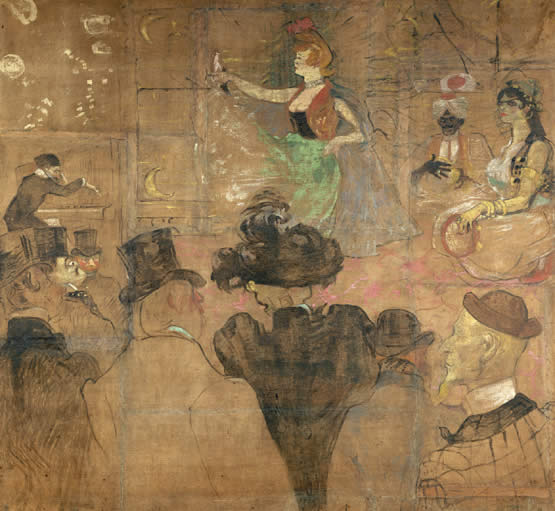
No comments:
Post a Comment