The Guardian World News |

- Gaddafi: 'My people would die to protect me'
- Mubarak barred from leaving Egypt
- NZ falls silent in quake memorial
- Hollywood star Jane Russell dies
- High-speed rail plan faces protests
- Lawyer to refuse most BP spill claims
- Battle over UK's 'squeezed middle'
- BA worker convicted of terrorist plot
- Storm over Galliano's Hitler remark
- MPs criticise cancer survival rates
- 7/7 inquest hears of missed messages
- Children's charity attacks vetting cuts
- HSBC profits double to almost £12bn
- Dictator's son's superyacht plans
- Return of the foam plastic coffee cup
- Do film-makers need to be accurate?
- Spiegel attacks 'incendiary' rival Bild
- Hope for blown up Buddha statues
- Obama may delay US climate action
- Dogs who listen to children reading
- How a coffee-maker made TV history
- Chinese rainforest project ablaze
| Gaddafi: 'My people would die to protect me' Posted: 28 Feb 2011 05:40 PM PST Libyan leader laughs off international pressure to step down while speaking to news organisations Muammar Gaddafi has insisted that the people of Libya love him and denied during an interview that there have been any demonstrations against his regime. "All my people love me. They would die to protect me," said the Libyan leader, speaking to news organisations including the BBC, laughing off international pressure to step down. "As if anyone would leave their homeland," he replied, accusing western leaders of betrayal and of having "no morals." Besides, he insisted, he had no official position from which he could resign: "It's honorary. It has nothing to do with exercising power or authority." "In Britain who has the power, is it Queen Elizabeth or is it David Cameron?" he asked. Throughout an interview, conducted at a Tripoli restaurant overlooking a port on the Mediterranean coast, he appeared to be in denial about the strength of the uprising against his 41-year rule that has ended his control over eastern Libya and is closing in on Tripoli itself. Sometimes breaking into English from Arabic, he repeated claims that al-Qaida was behind the uprising and said that young people involved in it had been given drugs, which were now beginning to wear off. Those who were under the influence of the drugs had seized weapons, but his supporters were under orders not to shoot back, he said. The Libyan leader also accused western countries of abandoning his government in its fight against terrorists and said he felt betrayed by the United States. "I'm surprised that we have an alliance with the west to fight al-Qaida, and now that we are fighting terrorists they have abandoned us," Gaddafi told his interviewers from ABC News, the BBC and the Sunday Times. "Perhaps they want to occupy Libya." Gaddafi described Barack Obama as a "good man" but said he appeared misinformed about the situation in Libya. "The statements I have heard from [Obama] must have come from someone else," Gaddafi said. "America is not the international police of the world." He went on to challenge other leaders, including David Cameron, who have accused him of having money abroad, to produce "one shred" of evidence that the Libyan leader had any money in the UK. The US ambassador to the UN, Susan Rice, said the interview showed that Gaddafi was delusional and "unfit to lead" his country. guardian.co.uk © Guardian News & Media Limited 2011 | Use of this content is subject to our Terms & Conditions | More Feeds
|
| Mubarak barred from leaving Egypt Posted: 28 Feb 2011 09:01 AM PST Attorney general announces travel ban and freeze on Hosni Mubarak's domestic assets in possible prelude to prosecution Egypt's former president Hosni Mubarak has been banned from leaving the country, as the interim government stepped up legal proceedings against the recently ousted dictator and his family. The Egyptian attorney general, Abdel Meguid Mahmoud, also announced that all of Mubarak's domestic assets would be frozen pending further enquiries. The measures extend to Mubarak's wife and children – including his youngest son, Gamal, a former banker and close associate of many of Egypt's leading businessmen – and may be the prelude to a formal prosecution. A number of former ministers from the deposed regime have already been made subject to travel bans and asset freezes since Mubarak was forced out of office on 11 February, and many are now facing possible trial on charges ranging from corruption to the unlawful killing of protesters. Until now Mubarak had seemed to be shielded from investigation by the ruling military council, a source of much anger among pro-change demonstrators who accuse army generals of cutting a deal with the former leader. "The decision to freeze Mubarak's and his family's assets in and outside Egypt is very important," said Tarek Osman, an Egyptian writer. "Apart from appeasing the masses and emphasising that the public prosecutor has a free hand, it sends a clear message to the remnants of the Mubarak administration that their attempts to exert influence in the next phase will not be tolerated – especially during the coming parliamentary elections." The armed forces have been criticised in recent days for dragging their heels on reform and pursuing a model of political transition which maintains several former regime figures in positions of authority. There has also been widespread concern that the delay in pursuing Mubarak and his family enabled them to move much of their fortune to safe havens abroad. Given that most of the legal efforts against Mubarak-era ministers seem so far to have been motivated by political considerations, the decision to launch legal proceedings against Mubarak now suggests Egypt's generals are fearful that public opinion will not tolerate any leniency for the former western ally who ruled Egypt for 30 years. It is not yet clear whether any prosecution of Mubarak would have a lasting impact on Egypt's politics, as the country prepares for a national referendum on constitutional reform. "This latest move will not bear much weight on the country's political landscape in the medium term," argued Osman. "The stalwarts of the Mubarak administration are not amongst the forces that will shape this coming period," he added. "The key variables are whether liberals will be able to put forward structured narratives and viable parties that can retain the momentum they created during the revolt, and also the struggles within political Islam, including the Muslim Brotherhood." guardian.co.uk © Guardian News & Media Limited 2011 | Use of this content is subject to our Terms & Conditions | More Feeds
|
| NZ falls silent in quake memorial Posted: 28 Feb 2011 06:53 PM PST Prime Minister John Key asked the nation's to join in a show of unity for people 'enduring tragedy beyond what most of us can imagine' Rescue crews switched off their jackhammers and joined in two minutes of silence observed across New Zealand on Tuesday to mourn as many as 240 people killed in an earthquake exactly one week earlier. Church bells tolled throughout the country at 12:51pm to mark the start of a national commemoration for those lost when the quake struck the southern city of Christchurch, collapsing office blocks and sending bricks and other rubble tumbling into the streets. Thousands of people across the city gathered in groups, or on their own, paused and bowed their heads. Backhoes and bulldozers tugging at the massive piles of rubble rumbled into silence. Traffic simply stopped. Flags flew at half-staff across the country, and Prime Minister John Key asked the nation's 4.5 million people to join in a show of unity for people "enduring tragedy beyond what most of us can imagine." The bells pealed again to end the silence. People hugged in the streets, cars started and moved on, and crews picking through the rubble fired up their machines and went back to work. Police said they have pulled 154 bodies from the wreckage, and said the number of others missing and feared dead indicated a final death toll higher than previously thought. "The figure ... of around 240 is solidifying," Superintendent Dave Cliff told reporters. The magnitude 6.3 quake struck within a few miles of downtown Christchurch, when the southern city of 350,000 was bustling with workers, shoppers and tourists going about their activities. It brought down or badly damaged office towers, churches and thousands of homes across the city in one of New Zealand's worst disasters. More than 900 international urban disaster specialists are among hundreds more local officials who continued to pick through the wreckage on Tuesday. No one has been pulled out alive since the day after the quake, and officials say it is almost certain no one else will be. "Realistically it would be a miracle if we encountered anyone at this stage on any of the sites which we are currently working on," said Jim Steward-Black, the co-ordinator of the New Zealand urban search and rescue teams. For Tuesday's ceremonies, people left offices, warehouses, factories and homes and stood in the street in silence. At one of Christchurch's busiest intersections, traffic halted in the shadow of the Knox Church and the historic Carlton Hotel, both ruined in the quake. "I was born here, I've lived here all my life and I'll die here. It's my home and it hurts so much to see it in this way," said Mike Cochrane, fighting back tears as he sat under a tree on the central traffic island. The realtor's office where Rosie MacLean works is the only unbroken building on the four corners of the intersection. "I suppose this is about hope, really, to realise we've got a future somewhere," she said. "But that's just hard to find at the moment. I guess this means we've reached a point where we can all acknowledge it together, which is a beautiful thing." At the headquarters of the rescue effort, bustling in the past week with the vivid urgency of its mission, work paused for the first time. Key, who grew up in Christchurch, joined the ceremony there, clutching the hand of his wife, Bronagh, who was born in the city. On Monday, a 5-month-old boy who was the youngest known victim of the disaster was its first laid to rest. A second funeral, for 22-year-old local Jaime Gilbert, was held Tuesday. With only six other people publicly identified so far, most other funerals may be some time away. guardian.co.uk © Guardian News & Media Limited 2011 | Use of this content is subject to our Terms & Conditions | More Feeds
|
| Hollywood star Jane Russell dies Posted: 28 Feb 2011 05:31 PM PST Hollywood siren shot to fame in Howard Hughes's film The Outlaw Jane Russell, the Hollywood siren of the 1940s and 1950s and star of Gentlemen Prefer Blondes alongside Marilyn Monroe, has died at the age of 89. She died at her home in Santa Maria, California of a respiratory-related illness, according to her daughter-in-law Etta Waterfield. Russell shot to fame in 1943 after Howard Hughes, the eccentric billionaire, discovered her and cast her in his controversial western, The Outlaw. The movie gained notoriety after censors kept the film from general release in a dispute over Russell's cleavage. Adverts for the film showed the star sprawled on a bale of hay with the tag line "How'd you like to tussle with Russell?" "Yes, Howard Hughes invented a bra for me. Or, he tried to. And one of the seamless ones like they have now. He was ahead of his time. But I never wore it in The Outlaw. And he never knew. He wasn't going to take my clothes off to check if I had … " Russell said. The film set the tone for a career in films that majored on her figure and talent for light comedy. Russell appeared in dozens of films and theatrical productions and wrote an autobiography in 1985 called My Path and Detours. Her biggest box-office hits were Paleface, a comedy western with Bob Hope, and Gentlemen Prefer Blondes. She made only a handful of films after the 1960s but remained active in her church, with charitable organisations and with a local singing group. Her health began to decline just a couple of weeks ago, her daughter-in-law told Associated Press. "She always said 'I'm going to die in the saddle, I'm not going to sit at home and become an old woman'," Waterfield said. "And that's exactly what she did, she died in the saddle." Jane Russell was born Ernestine Jane Geraldine Russell on June 21, 1921, in Bemidji, Minnesota. Her mother was a lay preacher. Russell showed a wild side from an early age and admitted to back street abortions and struggles with alcoholism. In later life she was a committed Republican and leader of the Hollywood Christian Group. "These days I am a teetotal, mean-spirited, right-wing, narrow-minded, conservative Christian bigot, but not a racist," she once said. Asked about today's liberal stars George Clooney and Sean Penn, she said: "I think they're not well." Her abortions left her unable to conceive and after experiencing problems adopting, she founded World Adoption International Agency. Russell is survived by three children, six grandchildren and 10 great-grandchildren. guardian.co.uk © Guardian News & Media Limited 2011 | Use of this content is subject to our Terms & Conditions | More Feeds
|
| High-speed rail plan faces protests Posted: 28 Feb 2011 11:51 AM PST Battles forecast over new track for second phase of network linking north with London via Birmingham The battleground over a £32bn high-speed rail network moved from the shires to the north after the government outlined the case for a second phase linking Birmingham to Manchester and Leeds. Undaunted by a backlash in Tory heartlands over plans for a 225mph London-to-Birmingham line, the transport secretary, Philip Hammond, backed plans for joining it to a Y-shaped national network. The proposals include a link to the Channel tunnel rail route that would transport passengers in Manchester and Leeds to Paris in less than four hours without a London stopover. However, the proposals for 200 miles of new track are likely to be of more immediate concern to the thousands of households that line the potential routes in Yorkshire, Staffordshire, Cheshire and Derbyshire. The Campaign to Protect Rural England (CPRE) said the economic arguments in favour of the northern extension of High Speed Two (HS2) could be drowned out by protests over blight. "As this proceeds, we are going to hear some very different voices from the north, arguing passionately about the beautiful local countryside," said Ralph Smyth, CPRE's senior transport campaigner. "Take the Cheshire area around Wilmslow, which lies right on the likely route of the Birmingham-to-Manchester line. You have got very wealthy, very influential people there, who are not going to take happily to HS2 driving through." Launching a consultation on a national high-speed network, Hammond was confident that the economic case would prove more powerful with residents in the north than it has in the home counties, with the full route forecast to produce a £44bn boost to the UK. "Ironically the further north we get the easier it will get. Once you get further away from the south-east people seem to understand more clearly the argument on jobs and growth." According to the Department for Transport, the first phase alone would help create 40,000 jobs. Hammond said the northern section could open in 2032, six years after the London-to-Birmingham route. A consultation on the specific route will start next year after detailed plans are published. It is understood that more than a dozen routes are under consideration for phase 2, which will be reduced to a shortlist by early 2012. If the proposals receive the green light, journey times to Manchester and Leeds from London will be reduced from more than two hours to 73 and 80 minutes respectively. Sources said planning for the Birmingham-to-Leeds section has proved particularly challenging, due to the hilly landscape and the number of small mining communities and former collieries dotted along the potential route. "It is a complicated landscape," said one expert. Hammond said ramblers in the Peak District would not be disturbed by bullet trains tearing through an area of outstanding natural beauty, with the Birmingham-to-Leeds line likely to pass between Derby and Nottingham, and to the east of one of Britain's most stunning national parks. However, the Chiltern Hills, another area of outstanding natural beauty, have been less fortunate and the first phase of the network will pass through the area when the line opens in 2026. Hammond said environmentally friendly amendments to the London-to-Birmingham route published in the consultation, such as deeper cuttings, would be repeated when the northern extension is drafted: "We will be doing exactly the same as we are doing in the Chilterns. We will work with communities and engineers to minimise the effect on sensitive landscapes." The Department for Transport is confident the rail route will challenge one of the major bastions of domestic aviation – the London to Scotland route – with a forecast journey time of three-and-a-half hours. Rail would take half of the air-rail market, the consultation argued. The current figure stands at 20%. Under the proposals high-speed trains will leave the network at Manchester and Leeds and travel to Scotland on conventional lines. The consultation argues that high-speed rail is the obvious solution to a looming capacity shortage on England's major rail routes, pointing out that passengers are already forced to stand up on peak-hour services on those lines. The document states: "Long-term forecasts have been developed on demand growth on these three main north-south lines out of London which connect the majority of Britain's major cities. These forecasts look forward to the early 2040s and show that, even allowing for a range of enhancements to these lines, crowding levels on long-distance services will continue to rise." However, the debates over blight and economics are likely to rumble on. Critics of the programme pounced on revised figures in the consultation, which showed that the economic benefit of the first phase would equate to £2 for every £1 spent, instead of the £2.70 that was forecast last year. "That is mediocre value for money by official Treasury standards," said Stephen Glaister, director of the RAC Foundation. A government source said that earlier estimates had been based on "fantastical" forecasts by the Labour government. guardian.co.uk © Guardian News & Media Limited 2011 | Use of this content is subject to our Terms & Conditions | More Feeds
|
| Lawyer to refuse most BP spill claims Posted: 28 Feb 2011 06:05 PM PST Vast majority of 130,000 unsettled claims do not have adequate documentation, says Ken Feinberg Upwards of 100,000 claims arising from the BP oil disaster in the Gulf of Mexico may never be paid, the beleaguered administrator of the oil company's compensation fund has acknowledged. A defensive Ken Feinberg, under fire from the Obama administration, Gulf leaders and local business for the slow pace of payouts for losses due to the BP spill, said the vast majority of the 130,000 unsettled claims did not have adequate documentation. "Here is the problem that I continually have to address … roughly 80% of the claims that we now have in the queue lack proof," Feinberg told foreign reporters in Washington. "That is a huge number." Feinberg did not rule out settling claims in the future, but he added: "The claims that were denied had woeful, inadequate or no documentation to speak of." He indicated that BP is unlikely to pay out more than the initial $20bn (£12.3bn)agreed for the compensation fund in a meeting at the White House last summer. "I am cautiously optimistic that $20bn will be enough," he said. Any funds remaining from the $20bn would revert to BP under an agreement with the White House, Feinberg said: "My understanding is that if $20bn is sufficient and there is money left over it is retained by BP. That is not on my watch, that is not my responsibility." The Obama administration, state governments, and local businesses have grown increasingly frustrated with Feinberg's handling of the claims process. Since August, Feinberg has paid out nearly $3.6bn to some 168,000 individuals and businesses in the Gulf. The state governments of Louisiana, Mississippi, Alabama and Florida accuse Feinberg of stalling claims, causing hardship to local businesses. They also accuse Feinberg of under-estimating losses to local businesses. They have asked the courts to order emergency payments. Earlier this month, a New Orleans judge ordered Feinberg to stop calling himself an independent operator, as BP pays his law firm $850,000 a month to oversee the compensation fund. BP meanwhile said Feinberg has been overly generous. Feinberg, on the defensive, told reporters that most of his estimates were based on the assumption that the Gulf would make a full recovery by the end of next year . However, the fishing and tourist industries, which were badly damaged by the spill, claim it will take much longer to recover. guardian.co.uk © Guardian News & Media Limited 2011 | Use of this content is subject to our Terms & Conditions | More Feeds
|
| Battle over UK's 'squeezed middle' Posted: 28 Feb 2011 03:08 PM PST George Osborne mocks Ed Miliband for failing to define term, and says Labour's policy is riddled with contradictions Labour and the Tories are squaring up for a pre-budget battle over Britain's "squeezed middle" after George Osborne responded to a Labour campaign by mocking Ed Miliband for ill-defined plans that would cover 90% of taxpayers. As the Labour leader published research showing that high earners have benefited disproportionately from rising wages over the past 30 years, the chancellor dismissed the campaign in a withering Guardian article. "Let's pass over his repeated failure in every interview to define [the squeezed middle] – his last effort included around 90% of taxpayers," Obsorne writes. The chancellor's assessment comes after Miliband intensified his campaign on behalf of Britain's "squeezed middle" by publishing research showing 22p in every pound of increased wages between 1979 and 2005 went to the highest earners. The Labour leader produced the analysis – carried out by the House of Commons library – at the launch of a cross-party commission on living standards that will investigate and propose ways to deal with the imbalance between those who gained from recent economic growth and those who have lost out. Set up by the Resolution Foundation, the commission will spend 14 months looking into what can be done to ameliorate factors affecting the third of the working population earning between £11,000 and £33,000, or the "squeezed middle". The chancellor says Miliband's campaign is not credible because Labour's economic policy is riddled with contradictions. Osborne says Ed Balls, the shadow chancellor, has belatedly signed up to Alistair Darling's plans to halve the fiscal deficit over four years. This would involve £14bn of spending cuts in the coming financial year – just £2bn less than the coalition's plans. Osborne writes: "The Labour leadership claims it would stick to Darling's plan to halve the deficit in four years, but day after day it opposes the spending cuts that requires ... With just five weeks to go until April we know everything about the cuts Labour opposes but nothing about the cuts it supports." The chancellor admits British families are facing "difficult times" as their incomes are squeezed by rising food prices and the consequences of cutting Britain's record peacetime fiscal deficit. "Where we can all agree is that these are difficult times for family incomes. There are two root causes of this trend. One is global: rises in food and commodity prices. The other is specific to the UK: the unwinding, through a 25% currency depreciation and an unavoidable fiscal consolidation, of economic imbalances built up under Labour. That is why the governor of the Bank of England has said 'the real consequences of this crisis are only beginning to be felt'." Members of the cross-party commission on living standards are drawn from banking, finance and social policy and include figures from big employers such as British Gas, who will represent realistic industry opinion on policy dilemmas like paying higher wages. All 12 members have been told they will have to have something to say on ideas such as the living wage, whether positive or negative. Those on low to middle incomes have become a central concern to the three main political parties, which are jostling to demonstrate they best understand the needs of the cohort. The deputy prime minister, Nick Clegg, who is to speak at Resolution's next event, has begun work on policies affecting this group, choosing to translate literally a phrase from the French president, Nicolas Sarkozy, and name the demographic "alarm clock Britain", reflecting that these families feel they rise for work early and return late, squeezing living standards. All parties are aware that low earners – for whom food and fuel bills are a greater part of their household budget – are feeling current inflation levels most acutely. Miliband, who stumbled over Christmas when he was unable to define the precise nature of the "squeezed middle", proposed areas he hopes the commission looks into. Emphasising the tax and benefit system could do only so much to address the problem, and effort had to be put into getting business to take some of the load, he suggested: • Tax incentives for companies to encourage them to pay a higher level of a guaranteed wage – a living wage at £7.80 that reflects the greater cost of living but is a cost fully borne by the employer. • Incentives to encourage companies to improve the skills of their workers so that they qualify for better-paid jobs – in Germany, he said, 80% of employees in retailing had had vocational training lasting two or three years and that allowed them to progress into managerial careers, compared with only three out of 10 of their British counterparts. When asked whether the task was economically viable when British companies faced competition from foreign, lower-paying multinationals, Miliband said: "I don't subscribe to that fatalistic view" and pointed out his examples of better models came from Germany, which has stayed competitive with countries such as China. Resolution's chair of trustees, Clive Cowdery, supported this position, saying the five main industries that employed half of all low-paid workers in the UK were largely insulated from truly international competition with the rising economic powers of Brazil, Russia, India and China. The concern would, however, remain a problem in another of the big five low-paying industries – manufacturing. Miliband repeated his criticism that Labour had been wrong, when in government, not to put sufficient thought into the type of economy it was building and failed to think how to help the creation of jobs for low to middle earners. He said a Labour government led by him would not remain "neutral" about the future quality of jobs. guardian.co.uk © Guardian News & Media Limited 2011 | Use of this content is subject to our Terms & Conditions | More Feeds
|
| BA worker convicted of terrorist plot Posted: 28 Feb 2011 06:51 AM PST IT expert used position at airline to try to help attack US-bound planes with radical cleric Anwar al-Awlaki A disciple of the Yemen-based radical cleric Anwar al-Awlaki has been found guilty of plotting to blow up a plane while working as a computer specialist with British Airways. Rajib Karim, 31, used his position as an IT expert with the airline to try to help stage attacks on the west. A jury at Woolwich crown court also found Karim, 31, guilty of three additional counts of preparing for terrorist attacks, including conspiring with on-the-run radical cleric Awlaki. Karim plotted to blow up an aircraft, shared information of use to Awlaki, offered to help financial or disruptive attacks on BA and gained a UK job to exploit terrorist purposes, the jurors ruled. Police took months to break encrypted messages on his computer. They found he had been in direct contact with Awlaki, who is accused of having links to the attempted bombing of a plane over Detroit during Christmas in 2009 and an attempt last year to explode ink printer bombs on freight planes heading to the US. Karim, who worked for BA in Newcastle, studied electronics at Manchester University from 1998 to 2002 where he gained a 2.2. He then went back to his native Bangladesh, where he supported an extremist organisation. He returned to the UK in 2006, purportedly to seek medical treatment for his young son, who was wrongly thought to have cancer. But police believe Karim had committed himself to violent jihad and sought a job where he could best help the terrorist cause. In September 2007 he became a graduate IT trainee with BA Police described the computer encryption Karim used as the most sophisticated they had seen in a British terrorist case. It took nine months to crack the secrets of his home computer, with one detective comparing the encryption to "Russian dolls", where one layer was cracked only to reveal another. The trial at Woolwich crown court, south-east London, heard Awlaki had written an email to Karim asking: "Is it possible to get a package or person with a package on board a flight heading to the US?" Police believe Karim was offering to supply information to terrorists that could be used to stage an attack. He also tried to join BA cabin crew during a strike but failed because of a technicality. Karim shared details of his BA contacts in encrypted emails, claiming to know of a sympathetic security guard and baggage handler. Jonathan Laidlaw QC, prosecuting, said of Karim: "He is ... an Islamic extremist, with close association to, if not membership of Jamaat ul-Mujahideen Bangladesh, an organisation committed to the establishment of Islamic rule in Bangladesh, responsible for terrorist attacks in Bangladesh, and with links to al-Qaida. The defendant ... believes terrorism, including murder of civilians, is permissible to establish, as he views it, a true Islamic state. [He] was anxious himself to carry out such an attack and determined to seek martyrdom." Karim had denied plotting to blow up a plane and gaining a job in the UK for terrorist purposes, but pleaded guilty to fundraising for terrorist organisations. He may have been planning to crash BA's sophisticated computer systems causing chaos and huge financial losses, the court heard. In one email Karim wrote: "'From the moment I entered this country my niyah [purpose] was to do something for the deen [faith], it was not to make a living here and start enjoying life." In February last year Awlaki wrote to Karim: "Our highest priority is the US. Anything there, even on a smaller scale compared to what we may do in the UK would be our choice. So the question is with the people you have is it possible to get a package or a person with a package on board a flight heading to the US?" A few days later Karim replied: "I do not know much about US I can work with the bros to find out the possibilities of shipping a package to a US-bound plane." The case highlighted the power of Awlaki to recruit people for jihad via the internet. Roshonara Choudhry, a student from London, was convicted last year of trying to murder the Labour MP Stephen Timms after watching Awlaki's sermons online, including on sites such as YouTube. guardian.co.uk © Guardian News & Media Limited 2011 | Use of this content is subject to our Terms & Conditions | More Feeds
|
| Storm over Galliano's Hitler remark Posted: 28 Feb 2011 12:37 PM PST Police question designer over alleged racist remarks as fresh video footage shows quarrel with two women John Galliano has spent more than five hours at a French police station being questioned about an alleged drunken rant in a Paris bar, in which he was said to have hurled racist and antisemitic abuse. His future as creative director of Christian Dior looked increasingly doubtful as video footage emerged of an apparently separate incident in which he is seen saying: "I love Hitler". Galliano, 50, wearing a large-brimmed black hat over his trademark bandana, arrived at the police station in the central 3rd arrondissement of Paris where he came face to face with the couple he is accused of accosting at La Perle bar in the chic Marais district last Thursday. The couple, a Jewish woman and her Asian boyfriend, told French radio Europe 1 the British designer had told them: "Dirty Jewish face, you should be dead" and "fucking Asian bastard, I will kill you". After last week's incident Galliano's lawyer, Stéphane Zerbib, said the designer was lodging a police complaint against the couple for "defamation, insults, threats and aggression". "This man and woman were aggressive to Galliano, mocking the way he looked. My client was insulted first and never made antisemitic remarks." The designer has denied making racist or antisemitic comments. A second woman came forward at the weekend claiming a separate incident took place in the same bar in October. A police source told Le Parisien the 48-year-old was at first "surprised by John Galliano's attitude and the fact he had a go at her apparently without any reason". "She said the designer was in a drunken state. She is sure about the nature of the insults because she speaks and understands English well," the source added. The woman told officers that at the time she had not complained to police because she blamed the outburst on the fact the designer had been drinking. Video footage posted on the Sun's website shows Galliano apparently arguing with two women in La Perle. A woman can be heard asking the designer: "Are you blond with blue eyes?" He replies: "No, but I love Hitler and people like you would be dead. Your mothers, your forefathers would all be fucking gassed." Neither of the women is Jewish. Zerbib said he "questioned the opportunism" of the new complaint. "When you are a victim of antisemitic or racist remarks, you do not wait four months (to lodge a complaint)," he told Reuters. "What matters isn't what's on the internet, what matters is the testimony and the hearing," he added. Galliano is due to present his autumn-winter collection for Dior this Friday and his own collection on Sunday. The haute couture fashion house, which has suspended the designer, has not said whether the show will go ahead. It stressed it has a "zero-tolerance" policy towards any racist or antisemitic behaviour. Muriel Piaser, head of Paris's biannual fashion trade show, said Dior was in a difficult position: "I think the situation is not tenable for Dior," she said "Dior sells everywhere around the world. Fashion sells dreams but it also involves respecting certain ethical codes." The flamboyant Galliano, 50, the Gibraltar-born son of a British plumber and a Spanish mother, has lived in Paris for 20 years. With his trademark moustache and ostentatious outfits he is a familiar figure in the Marais, the traditional Jewish area of Paris, now home to fashionable bars and a large gay community. guardian.co.uk © Guardian News & Media Limited 2011 | Use of this content is subject to our Terms & Conditions | More Feeds
|
| MPs criticise cancer survival rates Posted: 28 Feb 2011 04:01 PM PST Committee says death rate is too high because people do not seek help or doctors fail to diagnose the disease Cancer care in the NHS still falls short of comparable European countries despite 10 years of investment and government initiatives, according to an influential House of Commons committee. A report from the public accounts committee says too many people are dying of cancer in England within a year of diagnosis, usually because they do not seek help when they have symptoms or their GP does not recognise the disease. It is estimated that 10,000 more lives could be saved every year if survival rates were as good as the best in Europe. The committee gives credit to the Department of Health and the cancer tsar appointed by the last government, Professor Sir Mike Richards, for the progress in the last decade, but says it is not enough. The report points out significant weaknesses in cancer services – particularly on the better survival prospects for the rich over the poor and the inadequate collection and dissemination of data. "This committee fully supports the work by the Department of Health over the last 10 years to make tackling cancer a priority," said its chair, Margaret Hodge. "Mortality rates have been falling and cancer waiting times targets consistently achieved. "But the one-year survival rates in England are still poor compared with the best performing European countries and that is generally a sign of low awareness of symptoms, among the public and GPs, and late diagnosis. There also remain unexplained wide variations across the country in how cancer services perform and in types of treatment available. "It is very disappointing that, a decade after publication of the NHS cancer plan, there is still not enough good quality and timely information on such important aspects of cancer services as the use of chemotherapy and the stage at which patients' cancers are being diagnosed." The Labour government made cancer a top priority when it came into office. Cancer rates were increasing as the population aged but survival rates were lagging well below the best in Europe. The cancer tsar was appointed, care was restructured through "networks" of hospitals, each with a specialist centre at the hub and first a cancer plan and then a cancer reform strategy were drawn up. Spending rose from £3.4bn in 2003-04 to £6.3bn in 2008-09. But catching up with the best in Europe has been slow. The committee expresses concern that diagnosis is often late, particularly in deprived areas, with patients arriving in hospital with late-stage cancers, which are hard to treat and less likely to be survivable. The committee calls for government information campaigns, such as those used to create awareness of stroke. It also wants the cancer registries to collect and publish information more quickly and to include data on the stage of the cancer at diagnosis, which is not often collected. Committee members also say they were surprised that many primary care trusts, the present commissioners, had no idea whether cancer care in their area was cost-effective. Only 22% of them had attempted to assess whether they were getting value for money and 12% had no plans to do so. Variations in spending on cancer ranged from £58 to £154 a head in 2008-09. The health minister Paul Burstow said the report "shows exactly why we need to update the NHS". He added: "It is unacceptable that our cancer survival rates lag way behind our European neighbours, when we spend the equivalent amount on healthcare. If the NHS was performing at the level of the best in Europe, an extra 10,000 lives could be saved each year." The coalition government had taken swift action to improve cancer survival rates since last May, the minister said in a statement. "We have already launched a new £60m bowel cancer screening service, a £25m fund to improve diagnostics in the community, £50m more on a cancer drugs fund, and set out plans for an extra 1,200 cancer specialists who will be in post by 2012. "Our plans will ensure patients get the best care at each stage that they need it because we are focusing on survival rates, not simply targets like the previous government. And we are devolving power to GPs who know better than bureaucrats how to improve care for their patients". Among the government's other plans, the department said, was an awareness campaign to alert people to the symptoms of breast, lung and bowel cancer. guardian.co.uk © Guardian News & Media Limited 2011 | Use of this content is subject to our Terms & Conditions | More Feeds
|
| 7/7 inquest hears of missed messages Posted: 28 Feb 2011 10:57 AM PST Ambulance official says volume of information meant messages weren't acted on 'as quickly as perhaps they should have been' Chaotic scenes at the London ambulance service headquarters, with emergency phone calls going unheard, key personnel unable to log on to computers and emergency vehicle ignition keys lost, led to critical delays in paramedics responding to the 7/7 bombings, it has emerged. The inquests for the 52 victims of the 2005 bombings heard that so great was the confusion among those supposedly in strategic command of the ambulance response that three hours after the first attacks they were still unclear how many bombings had taken place. It was believed there may have been bombings at Leicester Square and Euston, and there was no record of an incident at Tavistock Square. This was despite the fact that more junior officers had redirected ambulances to the latter location to help victims of the bus bombing and the site had been officially "cleared" an hour earlier. In the final week of evidence in the five-month hearings, Jason Killens, deputy director of operations at the ambulance service, said a single radio operator had been responsible for responding to and logging calls relating to all four bomb scenes, which were coming in on two different radio channels and by landline, mobile phone, fax and memo. The operator was able to type only with "two fingers and a thumb", the inquests heard, further delaying the response. Requests for assistance from the scenes were not heard or went unprocessed, said Killens. "There were a number of critical messages which we received in the control room which it is my understanding, due to the volume of information that was being processed, they weren't acted upon as quickly as perhaps they should have been." Other key failings identified in court included: • Staff setting up the "Gold command" room, designated specifically for the response to the bombings as opposed to general 999 calls, were unable to log on to its computers. • Critical messages were scribbled on scraps of paper due to problems with the computer system. • The incident status was recorded on a whiteboard that the staff member tasked with updating it was too short to reach. • Staff members were sent to Bow, in east London, to set up a backup control centre, but were similarly unable to log on when they arrived. Since they had been given an incorrect phone number they could not reach headquarters, so the backup was never operational. • Calls from the Metropolitan police were redirected to the standard 999 system, rather than the 7/7 team, further delaying the response. • The designated Gold control room was too small to accommodate all those staff required, and because senior staff continually walked in and out the operator was unable to hear messages. • Two of those appointed to "crucial" Gold command roles were untrained for the positions. Because the mobile phone system was "totally overloaded and useless", according to a senior medic at the time, SMS messages from paramedics on the ground – at the time a key part of the service's communications strategy – were unsent. Of two emergency communications vehicles containing critical telecom backup to allow paramedics to speak to base, only one was dispatched because the keys for the other were missing. The engineer tasked with operating the first vehicle was not informed until later; when he arrived at the scene he was unable to find the vehicle and so returned to base. Killens was asked about evidence the ambulance service had given to the London assembly in 2006 when, he accepted, the service "did not provide a complete picture of what took place on 7 July". "You were economical with the actualité, to use Alan Clark's famous expression?" asked Hugo Keith QC, lead counsel to the inquests. Killens replied: "I would not agree with you in that regard. The information provided to the London assembly [was given] in good faith. There was no intent to deceive." Asked why the response had been so confused, Killens said the service's major incident planning had focused on a single incident rather than multiple emergencies. He was, he said, "exceptionally confident" that the service's ability to respond to multiple incidents had improved. The service now had a much bigger dedicated incident control room, with trained and designated controllers on each 999 watch, he said. All staff now use digital radios allowing them to communicate underground, there is a backup motorcycle response team to carry messages, and a system of communication by pagers – abandoned in favour of SMS before 2005 – has been reinstated. He said the force's major incident plan would be reviewed based on the findings of the inquests. guardian.co.uk © Guardian News & Media Limited 2011 | Use of this content is subject to our Terms & Conditions | More Feeds
|
| Children's charity attacks vetting cuts Posted: 28 Feb 2011 10:24 AM PST NSPCC says loophole could let barred individuals work as teaching assistants or in maintenance at a children's hospital A child protection charity has voiced serious concern that children will be put at risk by a loophole they have identified in the government's plans to scale back the vetting and barring scheme to "commonsense levels". The NSPCC says the coalition's proposal to reduce the scope of activities covered by the scheme means that barred individuals could work as teaching assistants, Sunday school helpers or in other temporary, part-time or supervised roles without the employer having full knowledge of their past. When ministers published their proposal they said child protection remained their top priority but that it was also important well-meaning adults were not put off working or volunteering with children. The changes to the scheme are detailed in clause 63 of the protection of freedoms bill, which has its second reading in the Commons on Tuesday. "A person might be barred from regulated activity, but would then be able to move into non-regulated activity with children without sanction and without employers necessarily being alerted to the risk they pose," says the NSPCC's briefing for MPs. "For example, someone barred from teaching because of inappropriate relationships with young people could become a voluntary teaching assistant. Under these proposals an employer could conduct an enhanced disclosure check, but this will only show criminality information not barring information." The charity says this is "highly concerning", arguing that "most people who pose a risk to children are not prosecuted, and thus future employers may not be alerted to the risks they pose". Other examples it cites include giving legal advice to children and working as a volunteer literacy helper or as a maintenance worker in a children's hospital. Yvette Cooper, the shadow home secretary, said she was worried about the loopholes identified by the NSPCC. "Most parents would be deeply troubled by the idea that a teacher who has been barred for sexual grooming of a child could then work as a teaching assistant with no one aware of their past," she said. "We will be calling on the government in the debate to think again and make sure these loopholes are dealt with and child safety is put first." The government's own review of the vetting and barring scheme acknowledged that the measure could lead to an increase in "safeguarding risks". It said: "Some people who may have previously been barred, or may now be barred from the reduced and redefined range of regulated activities, may be able to gain posts in other areas where they are able to work less closely with children or vulnerable adults. "It will be up to employers to weigh up the risks involved." guardian.co.uk © Guardian News & Media Limited 2011 | Use of this content is subject to our Terms & Conditions | More Feeds
|
| HSBC profits double to almost £12bn Posted: 28 Feb 2011 11:09 AM PST • 253 staff earned more than £1m HSBC set the pace for disclosure of bankers' pay by revealing that 253 of its staff earn more than £1m as it reported a more than doubling of profits to $19bn (£11.8bn) in 2010. Britain's largest bank provided more information on top pay than any of its rivals as chairman Douglas Flint admitted that 89 staff paid more than £1m were based in the UK. Under disclosure demanded by the authorities in Hong Kong, the bank said that the five "highest paid individuals globally" – including a non-board director who took home between £8.4m and £8.5m – received a combined £34.3m in salaries, bonuses and pension contributions. But, under the disclosure required in the UK through Project Merlin, the total of the "five highest paid senior executives" was just over £12m – prompting accusations that the coalition was allowing banks to hide the pay of its highest paid traders and deal-doers in a way that the Hong Kong rules did not. Lord Oakeshott, the Liberal Democrat peer who resigned as the party's Treasury spokesman in the Lords after criticising Project Merlin, said: "British disclosure standards under what is a Project Mirage are less than half Hong Kong's. Shareholders and non-executives need to know all the biggest packages, not just the ones it suits to show." Labour MP Chuka Umunna, who sits on the Treasury select committee, said he had tabled questions to the chancellor to seek clarity on what the Treasury uses to define "executive". A Treasury spokesman said the coalition had set "world-leading" disclosure on pay. Flint said the discrepancy was because the UK wanted to know the pay of five individuals who reported to the chief executive while Hong Kong wanted to know the five highest paid, which included traders. The bank also complied with a new Financial Services Authority rule, which requires so-called "code staff" – those deemed to be high paid and taking big risks – to have their pay published in aggregate. Becoming the first bank to do this – nine months earlier than required – HSBC said 280 of its most senior employees earned a total of $471m, which averages at $1.7m – just over £1m. Some 186 of these are in the UK. Stuart Gulliver, who took over as chief executive at the start of the year, is to take his £5.2m bonus in shares. His total pay was £6.1m, down on the £10m he received a year ago when he was the highest-paid employee of the bank. He was handed an extra £3m worth of shares from pay plans dating back to 2007, although the bank insisted this was double counting. While the chief executive's office is Hong Kong, Gulliver joked he lives on Cathay Pacific and British Airways, spending a third of his time in the UK, a third in Hong Kong and a third in the air. He replaced Michael Geoghegan as chief executive after a very public boardroom reshuffle. For 2010 Geoghegan received £5.8m. After stepping down at the end of December, he is also to receive £1m for 2011 and a pension contribution of £401,250. He will receive £200,000 in consultancy fees to 1 April, which he will donate to charity. The bank cut its long-term return on equity target to 12-15% from 15-19%, blaming the costs caused by regulations requiring banks to hold more capital and extra liquid instruments that can be sold quickly in a crisis. Its shares fell 4% to 678p as the market digested numbers which, Gulliver admitted, showed income was flat, costs were up and that profits had been bolstered by the $12.4bn fall in impairments to $14bn – the lowest since 2006. For 2009 the bank reported a 24% fall in pre-tax profit to $7bn. guardian.co.uk © Guardian News & Media Limited 2011 | Use of this content is subject to our Terms & Conditions | More Feeds
|
| Dictator's son's superyacht plans Posted: 28 Feb 2011 12:02 PM PST Teodorin Obiang ordered design of yacht worth three times Equatorial Guinea's health and education bill, says watchdog The playboy son of one of Africa's most notorious dictators commissioned plans for a luxury superyacht costing $380m (£234m) – nearly three times his country's combined health and education budgets, according to a corruption watchdog. Teodorin Obiang, eldest son of Teodoro Obiang, the president of Equatorial Guinea, wanted to build the world's second most expensive yacht after the Russian tycoon Roman Abramovich's $1.2bn Eclipse, the campaign group Global Witness said. It condemned the plan as "outrageous extravagance" in a country where, despite vast oil wealth, 20% of children die before their fifth birthday and few people live beyond 50. The government of the tiny west African country confirmed that Obiang junior had ordered the yacht design, but said he had decided against going ahead with it. President Obiang has ruled for more than 30 years and been accused of grave human rights violations. Forbes magazine estimated his wealth at around $600m. Teodorin Obiang, 41, is his minister of agriculture and apparently being groomed as his father's successor. Global Witness said his "extravagant lifestyle" includes a $35m mansion in Malibu , a $33m jet and a fleet of luxury cars – yet his ministerial salary is $6,799 a month. Global Witness claimed Obiang asked the German company Kusch Yachts to build the superyacht under the codename "Project Zen". It said Kusch employees told investigators the 387ft yacht would have a cinema, restaurant, bar, pool and a $1.3m security system complete with floor motion sensors, photoelectric barriers and fingerprint door openers. The basic design was completed by Kusch in December 2009 for €250,000 (£212,192) with an original delivery date set for late next year. Gavin Hayman, the Global Witness director of campaigns, said: "Kusch's motto is, 'We don't just build yachts that you use, we create a dream that you live'. But this sounds more like a nightmare for Equatorial Guinea's oppressed and brutalised citizens, whose money may once again be put to Teodorin's benefit rather than theirs." Kusch Yachts declined to comment. Karin Jorgensen, secretary to the managing director, said: "As you will know, everybody working in the business of mega yachts is obliged by contract to strict confidentiality, as far as projects are concerned, and also with respect to clients." A spokeswoman for the Equatorial Guinea government said: "The minister requested a sketch of the design of a yacht three to four years ago and no contract or agreement exists with the Kusch company. "If there is no agreement or contract, it is evident that one cannot talk about cost, because there was no major interest in the proposal received and this proposal was not implemented. "The minister did not order that a yacht be built in order to supposedly pay for it. The minister requested a sketch of what building a yacht would entail, and then dismissed the idea of buying it. Therefore, there was no agreement or formal order to build the yacht; and if it had been viable to purchase it, he would have bought it with income from his private business activities and not with funds derived from sources of illegal financing or corruption." In 2006 Obiang junior justified his wealth in a sworn affidavit to a South African court questioning his ownership of luxury mansions and cars. He said officials in his country were allowed to join with foreign companies bidding for government contracts and this means "a cabinet minister ends up with a sizable part of the contract price in his bank account." A US justice department investigation into US banks accepting some $75m from Teodorin said in a 2007 report that "it is suspected that a large portion of Teodoro Nguema Obiang's assets have originated from extortion, theft of public funds, or other corrupt conduct". The US state department's most recent human rights assessment for Equatorial Guinea described unlawful killings, torture of prisoners, official impunity, arbitrary arrest and restrictions on free speech. The writer Juan Tomás Ávila Laurel is in the 17th day of a hunger strike demanding justice for the people of Equatorial Guinea, inspired by the popular revolutions in Egypt, Libya and Tunisia. The Obiang family and President Denis Sassou-Nguesso of Congo-Brazzaville are facing a fraud inquiry in Paris for allegedly embezzling state funds to acquire vast assets in France, including bank accounts, villas and luxury cars. guardian.co.uk © Guardian News & Media Limited 2011 | Use of this content is subject to our Terms & Conditions | More Feeds
|
| Return of the foam plastic coffee cup Posted: 28 Feb 2011 01:34 PM PST Polystyrene makes comeback in US Congress building after Republicans reverse green initiatives brought in by Democrats A bit like the Republican party, they are white, seemingly indestructible and bad for the environment. But after an absence of four years, foam plastic coffee cups have made a comeback in the basement coffee shop of the United States Congress building after Republicans began reversing a series of in-house green initiatives undertaken by Democrats. The about-turn was announced by a press aide to John Boehner, the speaker of the House of Representatives, who tweeted on Monday morning: "The new majority – plasticware is back". When the Democrats held the house, the former speaker Nancy Pelosi put the cafeterias at the centre of a plan to hugely reduce the carbon footprint of Congress. The ancient power plant in Washington DC a few blocks from the Capitol building, which provides heating and cooling for Congress and the supreme court, was converted from coal to natural gas. Compact fluorescent lighting and energy-efficient vending machines were introduced. In the cafeterias, polystyrene packaging was replaced with trays and utensils made of biodegradable corn starch. Four separate stations were installed for recycling and sorting. A healthier menu was also introduced in 2008, offering cage-free eggs and antibiotic-free beef. Items deemed compostable waste, such as coffee cups, were sent to a pulper in a lower basement, which squeezed out all the liquid before dispatching the material by truck to a commercial composting site in the suburbs of Washington DC. There, the waste was mixed with soil, which eventually returned to Capitol Hill to be used as fertiliser on the grounds. Hundreds of tonnes of waste was saved from landfills yearly, Democrats said. But the new green cafeteria was not universally popular – even when Democrats were in charge. Diners complained the cutlery would bend or break on the point of contact with solid food. Once Republicans were back in charge of the house, with their suspicion of environmental protection, the days of compostable coffee cups were numbered. Dan Lungren, chair of the house administration committee, said the $475,000 per year programme was too expensive and not even green. "After a thorough review of the house's composting operations, I have concluded that it is neither cost effective nor energy efficient to continue the programme," he said in a statement on his website. Next on the Republican agenda of environmental retro moves? Lightbulbs. House Republicans introduced a bill last week to repeal the government's decision to phase out the old energy-inefficient bulbs, which was due to start in 2012. Environmental organisations condemned the return to plastic. "They are willing to undo progress when they should be looking at getting their own house in order. " said Tony Iallonardo of the National Wildlife Federation. guardian.co.uk © Guardian News & Media Limited 2011 | Use of this content is subject to our Terms & Conditions | More Feeds
|
| Do film-makers need to be accurate? Posted: 28 Feb 2011 07:19 AM PST From Ridley Scott's Robin Hood to Robert Graves's I, Claudius, the best historical representations use a colourful imagination to transport us back in time The royal film in the news is The King's Speech, and so – as ever the first with film – I have been catching up with the 2008 version of the novel The Other Boleyn Girl. Tom Hooper's award-winner has been accused of playing fast and loose with historical fact. But the earlier film, starring Natalie Portman and Scarlett Johansson, manages to virtually edit out a rather large historical fact: the Reformation. Henry VIII is not characterised as Henry VIII at all; he has no Henry VIII-like qualities. He is just a fairytale king in a fairytale story. Figures such as Thomas More have been removed and the story of Henry's divorce from his first queen and its massive historical consequences reduced to an entirely unrealistic trial scene. The dialogue, full of 21st-century banalities, gives no clue that these were serious people in a serious time. But historical fiction is not historical fact, as any glance at a bookshop would reveal. None of the classics of the genre, from Robert Graves's I, Claudius to Hilary Mantel's Wolf Hall, are pedantically accurate. They are stories. Entertainment. So which liberties are acceptable to take, and which are not? If you do not find history interesting, it does not matter – the historical fantasy does not have to mean anything or depict anything true about the past. But if you do think historical fiction should deliver some kind of historical meat, it does not have to be served up sedately. I was surprised that critics were so hard on the supposed inaccuracy of Ridley Scott's Robin Hood. It plays around with the legend of the green man of the forest – which never was a true story – and garbles the story of King John and Magna Carta: but so what? Ridley Scott loves the colours and textures of other times and places. In all his history epics he goes out of his way to recreate not so much the narrative details as the look and heft of history: the design of a medieval siege engine, the rituals of a particular moment. In Robin Hood, there is a shot of London that features a loving reconstruction of the old gothic St Paul's – burnt in the great fire of London – at the heart of what by present-day standards is just a town surrounded by forest. Whatever its faults, it makes you realise that medieval England was a far greener country, with far fewer people, living in a world still dominated by natural cycles and seasons. For me, that is the kind of insight that history should be about. History is an act of imagination. It is about trying to get inside other people's skins, about seeing the world from remote perspectives. Historical cinema can do this brilliantly, and it does not have to be pedantic to create a sense of time travel. You can read a dozen books about Roman society, but it took Scott's film Gladiator to put audiences into the stone seats of the Colosseum, to share the passions of the raging crowd – to feel, for a moment, the emotions of a Roman. guardian.co.uk © Guardian News & Media Limited 2011 | Use of this content is subject to our Terms & Conditions | More Feeds
|
| Spiegel attacks 'incendiary' rival Bild Posted: 28 Feb 2011 08:39 AM PST Investigative reporters at Der Spiegel claim Bild wields too much power over German politics It is Europe's biggest-selling newspaper, with a 3m daily circulation and 12 million readers. But according to one of its most powerful rivals, the German tabloid Bild is an "incendiary" publication "which fulfils the role of a rightwing popular party Germany has never had". For the cover story of its latest edition, Der Spiegel magazine deployed seven reporters to investigate Bild's "moral standards and journalistic quality", a move which marks a clear break with the general German media convention of not criticising one's rivals in public. The investigation team came to such a damning conclusion that Der Spiegel decided to hold back the exposé until two journalists from Bild am Sonntag, the tabloid's Sunday paper, were freed from Iran on spying charges last week. To print such bald criticism prior to their release could have posed a "diplomatic risk", said a Spiegel editorial. Der Spiegel's key concern is that Bild wields too much power. "In the corridors of the Reichstag, the ministries and also in the chancellery, there is the pronounced tendency to take Bild's headlines at face value, without further exploration, as a valid expression of the popular mood," wrote the magazine. For Angela Merkel's Christian Democrats (CDU), Bild functions as the party's "rightwing faction", said Der Spiegel. And where Bild treads, Merkel follows. Bild's protracted campaign against immigration - featuring headlines such as "Every fourth baby comes from abroad" and "The bitter truth about foreigners and benefits: 90% of Lebanese and 26% of Turks are supported by our state" - have, say critics, encouraged the German government to take a hard line on migrants, restricting their benefits in the welfare reform bill. Merkel's generally unsympathetic take on eurozone bailouts can also be traced back to Bild front pages, Der Spiegel argues. Last spring, when Germany had been asked to pump money into Greece, the tabloid ran a stream of headlines including: "Is Greece going to break our banks?" and "Greeks want our money". It even dispatched a reporter to dish out old Greek banknotes in the centre of Athens under the headline: "Bild gives broke Greeks their drachmas back". Over the weekend, Bild was also under fire from the singer of one of Germany's most popular bands. Judith Holofernes, frontwoman of Wir sind Helden (We Are Heroes), wrote a scathing open letter to Bild's advertising agency after they asked her to star in their latest campaign. "Bild is not a harmless guilty pleasure", she wrote, but a "dangerous political instrument - not only a high magnification telescope into the abyss but an evil creature". Der Spiegel says Bild's editors are no longer content with being the "bully" of the German media landscape: they now see themselves not as outsiders, but as representatives of the German mainstream. "Not the pariah but the model pupil." But Kai Diekmann, Bild's editor-in-chief, denied his paper behaved like an "arsonist", inflaming prejudices. "We are number one because we don't just give people the facts, we also talk about how the facts make people feel: if you read us, you discover what holds the country together, what moves people," he said. Eight hundred journalists work for Bild, producing 27 regional editions. Though circulation has sunk from its 4.5m daily sales high of 2001, Bild remains a profitable endeavour. As well as income from advertising and the 60 cent (51p) cover price, Bild runs a line of faintly nationalistic "Volks-Produkte" (People's Products) which include Volks-Jeans, Volks-Pizza and Volks-Pcs. Despite its circulation, Bild is not as powerful as British tabloids, according to media commentator Lutz Hachmeister, head of the independent Institute for Media Policy in Berlin: "It's not as powerful as the Sun and Rupert Murdoch. Bild can't make a chancellor the way Murdoch made Tony Blair in 1997. They tried to dump Helmut Kohl at one point, but it didn't work." guardian.co.uk © Guardian News & Media Limited 2011 | Use of this content is subject to our Terms & Conditions | More Feeds
|
| Hope for blown up Buddha statues Posted: 28 Feb 2011 10:56 AM PST Scientists may be able to reconstruct giant sandstone Buddha in Afghanistan's Bamiyan Valley German scientists say it may be possible to reconstruct one of two giant 1,500-year-old Buddha statues dynamited by the Taliban in central Afghanistan 10 years ago. Their destruction prompted a worldwide outcry and left behind only towering cliff caverns. Researchers have studied several hundred fragments of the sandstone statues that once towered up to 180 feet (55m) high in Bamiyan province, and found that they were once brightly coloured in red, white and blue, said Erwin Emmerling of Munich's Technical University. The professor of restoration and conservation science, who has visited the Unesco world heritage site about 15 times since 2007, says research has shown that the smaller of the pair – some 125 feet high – could be reconstructed using the recovered parts, even though there are some "political and practical obstacles" to overcome. "Conservation of the fragments would require the construction of a small factory in the Bamiyan Valley – alternatively some 1,400 rocks weighing up to two tonnes each would have to be transported to Germany," the university said. Emmerling is to present the findings at a Unesco conference on the Buddha statues' future starting on Wednesday in Paris. The Afghan government, whose representatives will attend the expert meeting, will ultimately decide on the statues' fate. The Taliban destroyed the towering Buddha statues in March 2001, less than a year before international forces toppled their government. The Bamiyan Valley, about 260 kilometres (160 miles) west of Kabul at an altitude of some 8,000 feet, once formed a branch of the Silk Road, which contributed to the diffusion of Buddhism from India to the region. Emmerling's team says mass spectrometer tests have allowed them to better determine the statues' age. Organic material in the fragments' clay layers were found to date from between 544 and 595 for the smaller Buddha and between 591 and 644 for the bigger one. The fragile sandstone fragments of the statues are currently either covered on the site or stored in a warehouse in Bamiyan province, awaiting the Afghan government's decision. guardian.co.uk © Guardian News & Media Limited 2011 | Use of this content is subject to our Terms & Conditions | More Feeds
|
| Obama may delay US climate action Posted: 28 Feb 2011 03:59 AM PST Funding gap could force president to order a two-year delay in Environmental Protection Agency action, conference hears Barack Obama may be forced to order a two-year delay in Environmental Protection Agency (EPA) action on climate change to try to avoid a complete government shutdown, an environmental conference has been warned. President Obama faces the prospect of a government shutdown by 4 March, with a funding gap leading to federal employees being sent home and government services temporarily closing down, unless he can reach a deal with Congress Republicans who are demanding a crippling $61bn (£38bn) in budget cuts. The house will begin debate on the spending bill on Tuesday following efforts at the weekend to avoid a government shutdown, with news reports suggesting Republicans might compromise on some of the cuts. The Republican plan would destroy Obama's capacity to pursue his green agenda, cutting the budget of the EPA by 30%, and stripping funds for projects he has championed such as clean energy research and high-speed rail. Obama may be forced to sacrifice the EPA's efforts to take the first steps this year towards regulating greenhouse gas emissions if it means he can continue funding the federal government for the next seven months. "If I was predicting, I would say that he might sign a delay provision, to delay the EPA effort for two years or something like that. It probably depends on the particular circumstances," Eileen Claussen, president of the Pew Centre on Global Climate Change, told a conference at the Georgetown Climate Centre. "I would bet that if it was a delay, and it was part of a money bill that was really important, he would sign it," she said. The Obama administration committed to cut emissions by 17% from 2005 levels at the UN climate change conference in Copenhagen in 2009. The EPA took the first steps to monitoring greenhouse gas emissions on 1 January 2011. The White House has said repeatedly that it would veto isolated measures to strip the EPA of its legal authority and funds to act on climate change. But officials have pointedly not offered the same assurances on whether the White House would be willing to risk a shutdown of the entire federal government to protect the agency and its green agenda. Some have suggested that a freeze on the EPA, is among the least damaging options available to the adminstration, which is facing a wholesale assault on Obama's green-tinged "win the future" agenda. Buried among the $61bn in Republican budget cuts are a series of measures that would strip the overall budget of the EPA by 30%. The cuts are aimed at restricting the EPA's legal authority and financial capacity to act on climate change, but they would also stop the agency from regulating broader concerns such as mountaintop mining removal and coal ash. Bob Perciasepe, the deputy head of the EPA, called the cuts "reckless", and suggested they were motivated by Republicans' opposition to government regulation. "They are not concerned so much with fiscal policy but really with disabling part of the EPA's capacity to do its job," he told the Georgetown climate conference. The Republican bill would specifically bar the Obama administration from funding programmes regulating greenhouse gas emissions, or connected to climate science and international negotiations for a deal to end global warming. It cuts funds for the post of White House climate adviser, Carol Browner, who has announced her resignation, and the State Department climate envoy, Todd Stern. It de-funds the UN climate science body, the Intergovernmental Panel on Climate Change, and the UN body for climate talks, the UNFCCC. The White House and Democrats in Congress have called the proposals extreme. The EPA faces other challenges to its authority in Congress, aside from those in the spending bill. One proposal, which has Democratic as well as Republican support, would delay the EPA's efforts to begin regulating greenhouse gas emissions this year. Maryam Brown, chief counsel to the house subcommittee on energy and power, told the conference Republicans were united in their opposition to the EPA regulating greenhouse gas emissions. "All of those members agree that the Clean Air Act because of its structure is not the right tool for executing those policies," she said. guardian.co.uk © Guardian News & Media Limited 2011 | Use of this content is subject to our Terms & Conditions | More Feeds
|
| Dogs who listen to children reading Posted: 28 Feb 2011 12:00 PM PST Scheme aims to encourage children to read aloud When children read to him, Danny does not criticise or correct their pronunciation. He just nods and pricks up an ear, although sometimes he closes his eyes and appears not to be listening. Danny is a greyhound and a novel way of encouraging pupils at Oakhill primary school in Tamworth, Staffordshire, to read aloud. A "listening dog", he is part of a scheme that originated in the US called Reading Education Assistance Dogs (Read). "It helps with their self-esteem in reading out loud because he is non-judgmental," says the dog's owner, Tony Nevett, who has a degree in animal-assisted therapy. "He doesn't judge them and he doesn't laugh at them. He's just a tool – the children don't realise they are reading, which they might not have the confidence to do in class." Some children even show Danny the pictures as they read. Danny received five months of training to become a Read dog. Greyhounds are particularly well-suited because they do not bark and their short coat is less likely to trigger allergies. Nevett hopes that the scheme, piloted in Kent, will spread. "We've had some success stories, including a girl with Down's Syndrome who really took to the dog and improved her reading," he says. "When Danny goes to sleep I tell the children that he's dreaming about their story." guardian.co.uk © Guardian News & Media Limited 2011 | Use of this content is subject to our Terms & Conditions | More Feeds
|
| How a coffee-maker made TV history Posted: 28 Feb 2011 12:00 PM PST Product placement is now allowed on British commercial television Today was the first day that product placement was allowed on British television: under new Ofcom rules, commercial broadcasters can accept payment to use or display certain products in TV programmes. How quick off the mark would they be? There weren't any obvious products onscreen at 9am on ITV1, but then consumers would be unlikely to run out and buy anything they saw on The Jeremy Kyle show, apart from a home DNA testing kit. On Five the set of The Wright Stuff was bare. C4 was showing an episode of Supernanny USA, but that doesn't count. In America, product placement is standard. It was reported that the first example of UK product placement might come during yesterday's transmission of ITV1's This Morning. And yes, there in the show's opening sequence was the little P you're required to display in the corner of the screen if you've got plans to showcase any gear during the programme. But there were no big brands to be seen, not even Holly Willoughby – she was off sick with a migraine. Initially, peering round the edges of Phillip Schofield to see if you can spot any logos hovering in the background helps to pass the time, but it's also frustrating. Where are all the products? It's just a lot of ugly vases. Their big TV monitor said SAMSUNG on it, but I am presuming that was there last Friday. It's not product placement if you don't get paid. Over on Five, Vanessa Feltz was holding a baby who was holding an orange. An unbranded orange, as far as I could see. Then the baby dropped the orange. This, it transpired, constituted a bit of a highlight. It wasn't until midday on This Morning – that's 90 minutes of sex tips and Dancing On Ice debriefs I had to sit through – that an intentionally placed product made its debut: in the studio kitchen, behind chef Phil Vickery's head, was a coffee machine. This is the so-called Dolce Gusto espresso maker; Nescafé reportedly paid £100,000 to secure its place on the kitchen worktop. You couldn't make out the name on it, though, and trying made it impossible to follow the easy moussaka recipe. I suppose Nescafé is hoping that regular This Morning viewers will see its product and somehow get a hankering for espresso, but the opposite happened to me. I spent two hours looking out for a coffee machine, and in the process I somehow watched This Morning. And I'm angry about it. guardian.co.uk © Guardian News & Media Limited 2011 | Use of this content is subject to our Terms & Conditions | More Feeds
|
| Chinese rainforest project ablaze Posted: 28 Feb 2011 07:25 AM PST Conservationists fear project to rebuild forest is in danger as trees are consumed by 30m-high flames One of the world's most advanced rainforest restoration projects may be going up in smoke in southern China. A short while ago, I received a frantic phone call from Bulang Mountain in Xishuangbanna, where scientists and conservationists are fleeing 30m-high flames that, they said, were consuming trees in seconds. Witnesses said the blaze had reached the edge of the Seeds of Heaven biodiversity development centre, where an ecologically healthy forest had been painstakingly rebuilt over the past four years on the site of a former rubber plantation. "It's like an inferno," Prof Friedhelm Goeltenboth, of the University of Hohenheim, told me. "It's horrific. This model, which is recognised internationally as one of the most advanced of its type in the world, is now going up in flames." The project – which was launched about five years ago by the German biologist Josef Margraf, now deceased, and his wife Minguo – pioneers a "rainforest farming" technique that creates a rich habitat for multiple species, from which a modest income for people can be cultivated from orchids, tea, honey and other products. Hopes were high that the project could offer an economically viable alternative to the monocultures that are gobbling up forests across vast swaths of south China and south-east Asia. German scientists and investors from Lufthansa told me they were visiting this week to evaluate progress. They were expected to sign up to a new commitment period tonight. But the fire intervened. The flames appear to have spread from the direction of a neighbouring cow farm. Local officials say the spark was deliberately lit to create a controlled firebreak. Others told the visiting group that the fire may have been part of an effort to clear land for the expansion of a cattle farm. "This is no accident. You just don't do a controlled fire on a windy day like today," said Pavlos Georgiadis, a former student of Margraf, who died of a heart attack last year. "This is the peak of the dry season. We haven't had rain for two months." He said the visitors tried to fight the fire as it approached Margraf's grave, which overlooks the forest he rebuilt. "My hair was singed, but there was nothing we could do. The nearby saplings were burning. We had to get out." The local fire department said they were aware of the annual burn but had not heard reports that it was out of control. "This is not a big fire. Every year they do this to prevent forest fires. It is not as big as it looks," said a man who gave his name as Zhao. The visitors were unconvinced. "This unique project is in danger," said Dr Claus-Peter Hutter, founder of Nature Life International, which has been involved in the project from its inception. Hundreds of people are now fighting the fire. Minguo Li-Margraf was devastated, but vowed to continue. "To see the trees burning is just too much. After everything, it is just too much. But we will not give up. We will become more resistant." guardian.co.uk © Guardian News & Media Limited 2011 | Use of this content is subject to our Terms & Conditions | More Feeds
|
| You are subscribed to email updates from The Guardian World News To stop receiving these emails, you may unsubscribe now. | Email delivery powered by Google |
| Google Inc., 20 West Kinzie, Chicago IL USA 60610 | |


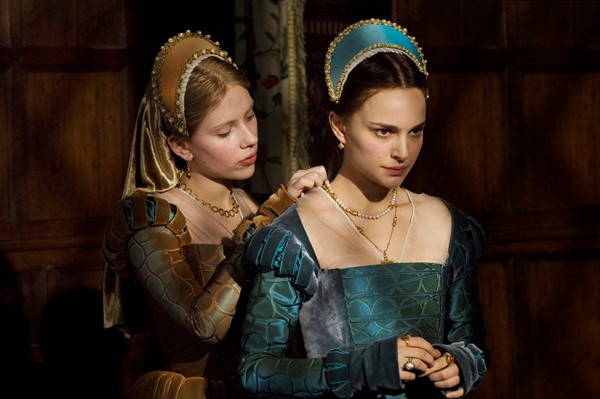

No comments:
Post a Comment